

The homeowner had been putting off a roof replacement for two years. “I’ll do it in the spring,” they said. Then spring became summer. Summer became fall. Fall became winter. “Now I’m worried it’s too cold to install a roof properly.”
That’s a common concern in New Jersey. And while roof replacement is possible year-round, timing does matter — not just for weather, but for contractor availability, project cost, and how well your shingles actually seal.
This guide breaks down the best time to replace a roof in New Jersey, season by season, so you can make the right choice for your home.
The Short Answer
The best time to replace a roof in New Jersey is late August through October.
Temperatures stay within the 45°F to 85°F range that asphalt shingles need to thermally seal correctly. Humidity drops after summer. Roofing contractors are booking into fall rather than the packed summer backlog. There is still enough daylight for a full-day installation.
If that window passes, late spring — April through early June — is a close second.
Why Timing Matters
Asphalt shingles are the most common roofing material in New Jersey, and they have a specific requirement most homeowners don’t think about: thermal sealing.
Every architectural shingle comes with a factory-applied adhesive strip on its underside. That strip needs solar heat to activate and bond the shingle to the course below it. The bond forms best when ambient temperatures are between 40°F and 85°F, and the shingle surface itself needs to reach roughly 70°F to 80°F for the adhesive to fully activate.
Install outside that window, and the roof is still functional. It is watertight from the nails and overlap. But the thermal seal that protects against wind uplift has not formed yet. In late fall or winter, that seal may not activate until the following spring.
This is not a reason to panic about winter installations, but it is a reason to understand what you are getting and to make sure your contractor uses proper cold-weather installation techniques when temperatures drop.
Beyond the material science, timing also affects contractor availability, project cost, and weather risk. New Jersey gets summer thunderstorms, nor’easters, and the tail end of Atlantic hurricane season, all of which can delay a mid-project roof.
Season-by-Season Breakdown
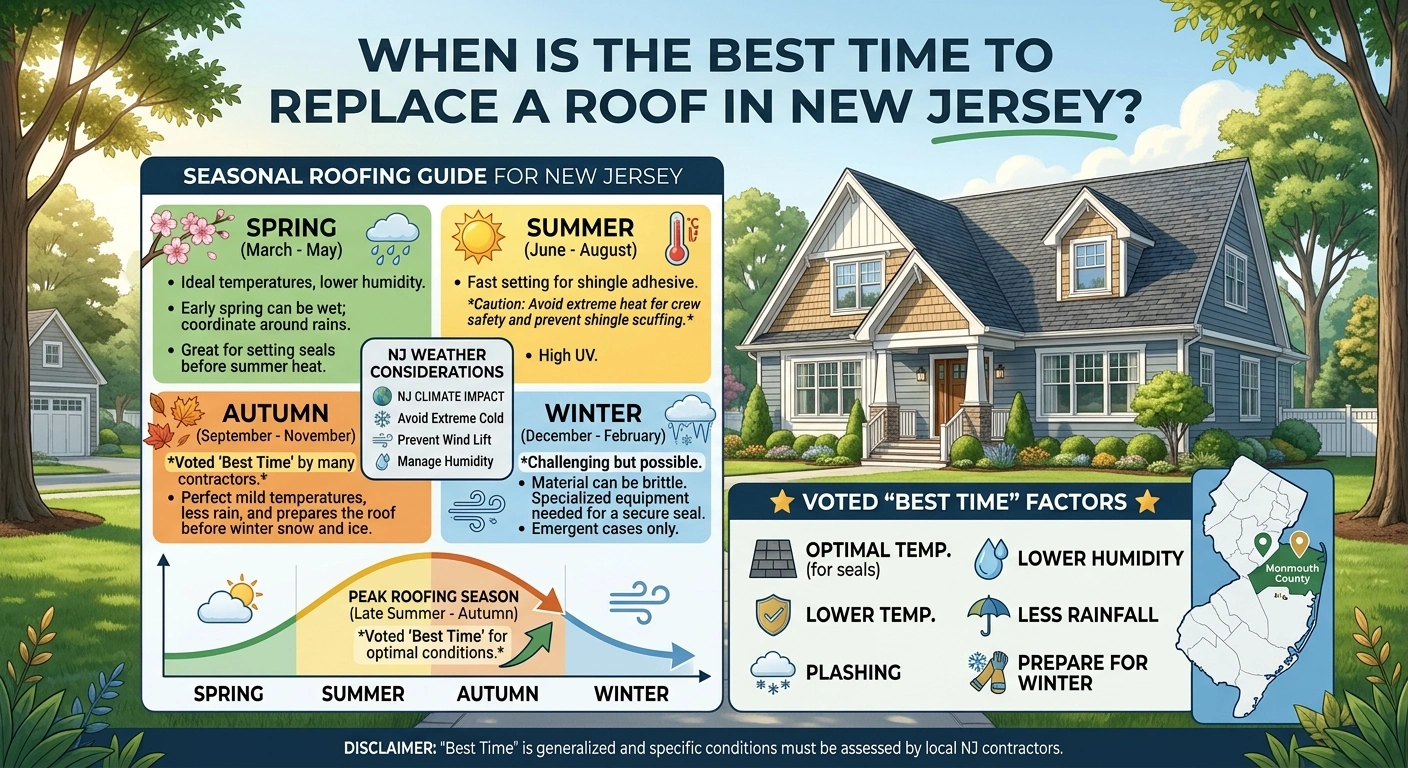
Late Summer to Early Fall (August – October) — BEST
Why it’s best: Temperatures in New Jersey typically hold between 55°F and 80°F through September and October. Humidity drops after the peak summer months. The risk of summer thunderstorms decreases. Daylight hours are still long enough for a full installation day without rushing.
Contractor availability: Fall is more accessible than peak summer. Many homeowners book roof replacements reactively — after a storm or when a leak appears. That pattern keeps summer schedules packed. Late August and September tend to have more availability, which means you can often get your preferred contractor on a tighter timeline.
The window closes: As November approaches, temperatures start dropping toward the 40s and nor’easters become more likely. If you are targeting fall, book in July or August to secure your date. Waiting until October puts you at risk of losing the window to weather.
Spring (April – Early June) — SECOND BEST
Why it’s good: Temperatures warm into the ideal range by mid-April in most of the state. The freeze-thaw cycles that can complicate late winter installations are largely done. Shingles seal within days of installation rather than weeks.
The challenge: Scheduling. Many homeowners in NJ use spring as the time to address problems that developed over winter: ice dam damage, leak repairs, and deferred replacements. Roofing contractors fill their schedules quickly from March onward. If you want a spring installation, reach out in February or early March to get on the books.
Late spring (May into early June) is particularly good. The weather is consistent, hurricane season has not yet complicated the planning picture, and crews can work full days.
Summer (June – August) — PEAK SEASON, BUT CHALLENGING
Pros: Long daylight hours. Warm temperatures — shingles seal quickly and properly.
Cons: Peak demand means contractors are busiest — harder to schedule, potentially higher prices. Summer thunderstorms can delay projects. Extreme heat can make working conditions difficult for crews.
If you choose summer: Book early (March or April). Expect potential weather delays. Make sure your contractor has a plan for hot-weather installation (proper ventilation, hydration for crews).
Winter (November – March) — POSSIBLE, BUT NOT IDEAL
Pros: Contractor availability is better. Some contractors offer off-season discounts.
Cons: Cold temperatures mean shingles may not thermally seal until spring. Freeze-thaw cycles can complicate installation. Snow and ice can delay projects. Shorter daylight hours mean less work time per day.
If you must install in winter: Make sure your contractor uses cold-weather installation techniques — proper storage of materials, hand-sealing of shingles, and careful attention to weather windows.
The Cheapest Time of Year
While late winter and early spring often offer the cheapest time of year to replace a roof in New Jersey, it’s just as important to choose a trusted local contractor who will install your roof correctly regardless of the season.
When Should You NOT Replace Your Roof?
- During active leaks: If you have a leaking roof, don’t wait for the “perfect” season — temporary repairs or emergency replacement may be necessary.
- During extreme cold: Below 40°F, shingle sealing is compromised.
- During heavy rain or snow: Most contractors won’t work in active precipitation due to safety and quality concerns.
Frequently Asked Questions: Best Time to Replace a Roof in NJ
1. What is the best time of year to replace a roof in New Jersey?
Late August through October is the best window. Temperatures are ideal for shingle sealing, humidity is lower, and contractor availability is better than peak summer.
2. Is spring a good time to replace a roof in NJ?
Yes. April through early June is the second-best season. The main challenge is scheduling — contractors fill up quickly after winter.
3. Can you replace a roof in winter in New Jersey?
Yes, but it’s not ideal. Cold temperatures mean shingles may not thermally seal until spring. Contractors must use cold-weather installation techniques.
4. Why do shingles need warm weather to seal?
Architectural shingles have a factory-applied adhesive strip that needs solar heat to activate and bond. The bond forms best between 40°F and 85°F.
5. Is summer a bad time to replace a roof?
Summer works, but heat, storms, and schedule pressure can complicate the job. Contractor availability is at its lowest, and summer thunderstorms can delay projects.
6. When is the cheapest time to replace a roof in NJ?
Late winter and early spring often offer the best prices, as demand is lower. However, quality should be your primary concern.
7. How far in advance should I book a roof replacement?
For spring or fall installations, book 2–3 months in advance. Summer installations should be booked even earlier — March or April.
8. What happens if shingles are installed in cold weather?
The roof is still watertight from nails and overlap, but the thermal seal that protects against wind uplift may not form until the following spring.
9. Can rain delay my roof replacement?
Yes. New Jersey’s summer thunderstorms and nor’easters can delay projects. Fall has the lowest risk of weather-related delays.
10. Should I wait for the “perfect” season if I have a leak?
No. If you have an active leak, address it immediately with temporary repairs or emergency replacement. Don’t wait for ideal weather.