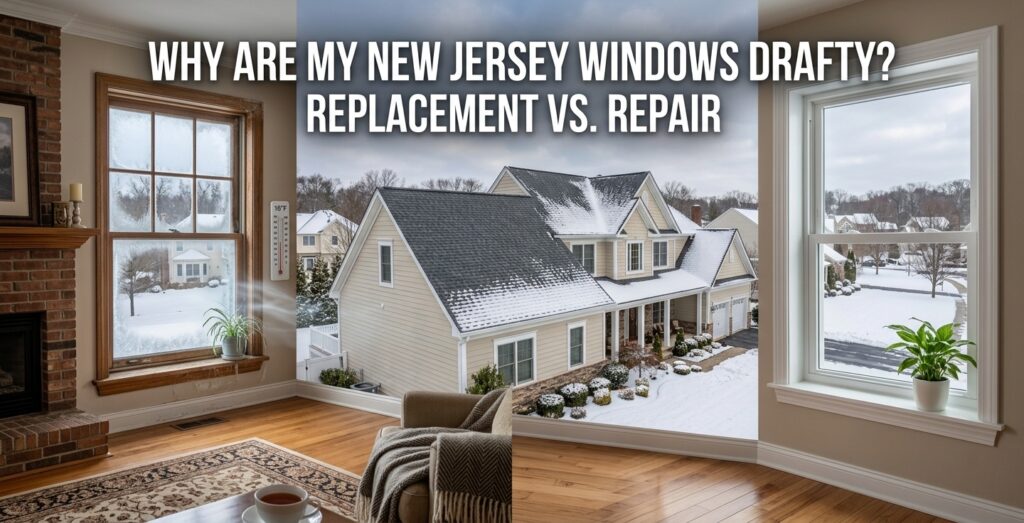


The homeowner in the 1950s Cape Cod sat in their living room on a January morning and watched the curtains move. The window was closed. The lock was engaged. But the draft was strong enough to make the drapes sway.
If that sounds familiar, you’re not alone. Drafty windows are one of the most common complaints among New Jersey homeowners — and they’re not just uncomfortable. They’re costing you money every single month.
This guide breaks down why windows get drafty, when you can fix them with a simple repair, and when it’s time to invest in full replacement.
Why Do Windows Get Drafty in the First Place?
Drafty windows are caused by one of three things: failed seals, failed frames, or failed installation. Understanding which one you have is the first step toward a solution.
Failed Seals (The Most Common Culprit)
If you have double-pane windows and you see fog, haze, or condensation between the glass panes, you’re dealing with a failed insulated glass unit (IGU) seal. The airtight seal around the glass unit has broken down, the insulating gas (usually argon) has escaped, and moist outside air has gotten in.
The symptom: Foggy glass you can’t wipe away. The window looks cloudy even after cleaning.
The fix: Glass-only IGU replacement. You keep the existing frame and replace just the sealed glass unit.
Failed Frames
If your window frame itself is compromised — wood rot, corroded aluminum, warped vinyl — repairs won’t solve the problem. The frame is the structural foundation of the window.
The symptom: Visible rot, rust, or warping. Windows that are difficult to open, close, or lock consistently.
The fix: Full window replacement.
Failed Installation
Sometimes the window itself is fine, but the installation around it has failed. Missing or degraded caulking, gaps in the flashing, or poor insulation around the frame can all cause drafts.
The symptom: Drafts around the edges of the window, but the glass itself is clear and the frame is sound.
The fix: Re-caulking, resealing, or adding insulation around the frame.
Window Repair vs. Replacement: The Quick Answer
Deciding whether to repair or replace your New Jersey windows can feel overwhelming. Here’s the framework:
Repair if:
- The issue is isolated — broken latch, sticking sash, cracked hardware
- The frame is structurally sound with no rot or decay
- The window is relatively new and otherwise performing well
Replace if:
- The frames are rotting, warped, or corroded
- You have fog between glass panes (failed seal)
- Persistent drafts even when windows are closed
- Windows are 15 years or older
What It Actually Costs in New Jersey
The cost difference between repair and replacement is significant:
| Service | Cost Per Window | What’s Included |
| Minor window repair | $70 – $350 | Hardware, seals, small cracks |
| Glass-only IGU replacement | $150 – $600 | Replacing just the sealed glass unit |
| Standard window replacement | $707 – $1,154 | Full unit, frame, installation |
| Premium window replacement | $1,195 – $2,095 | Higher-end materials, better energy performance |
Real talk: Repairs feel cheaper upfront. Replacement feels like a bigger commitment. But repeated repairs add up, energy loss continues year after year, and moisture damage costs far more than windows.
The Energy Savings Math
Replacing outdated single-pane or failing double-pane windows with ENERGY STAR qualified units can save New Jersey homeowners between $125 and $340 annually in home energy costs.
That means a $1,000 window replacement can pay for itself in energy savings within 3 to 8 years.
In New Jersey’s freeze-thaw climate, small gaps become big problems fast. Windows that leak air usually leak moisture too — it just takes longer to notice.
What New Jersey’s Climate Does to Windows
New Jersey’s four-season climate is tough on windows. Here’s what happens:
- Winter freeze-thaw cycles: Water gets into small cracks, freezes, expands, and makes the cracks bigger.
- Summer humidity: Moisture gets behind seals and accelerates failure.
- Coastal salt air (for Monmouth, Ocean, and Atlantic counties): Corrodes aluminum frames and hardware.
A window rated for 30 years in a mild climate might only last 15–20 years in New Jersey.
When to Call a Professional
If you’re not sure whether your windows need repair or replacement, a professional inspection is worth the peace of mind. A good contractor will:
- Inspect the frame for rot, corrosion, or warping
- Check the glass for seal failure
- Test for drafts and air leaks
- Give you a clear recommendation — not a sales pitch
Remember: Good repairs solve a specific problem. They don’t hide bigger ones.
Frequently Asked Questions: Drafty Windows in New Jersey
1. Why are my windows drafty even when closed?
Drafts typically come from failed seals, failed frames, or failed installation. If the frame is sound, re-caulking or resealing may fix it. If the frame is compromised, replacement is needed.
2. How much does window repair cost in New Jersey?
Minor repairs cost $70–$350 per window. Glass-only IGU replacement runs $150–$600. Major repairs involving frame damage can cost more.
3. How much does window replacement cost in New Jersey?
Standard window replacement runs $707–$1,154 per window. Premium windows run $1,195–$2,095. Labor costs in New Jersey are higher than the national average due to insurance and living costs.
4. How do I know if my window frame is failing?
Signs include visible rot, rust, or warping; windows that are hard to open, close, or lock; water stains or peeling paint near windows; and soft spots on wooden frames.
5. Can I just replace the glass instead of the whole window?
Yes. If the frame is sound, you can replace just the sealed glass unit (IGU). This costs significantly less than full replacement.
6. How much can I save on energy bills with new windows?
New ENERGY STAR qualified windows can save $125–$340 per year.
7. Should I repair or replace windows before selling my home?
If windows are drafty or visibly failing, buyers will ask for repairs or credits. Replacement typically recoups 70–80% of its cost at resale.
8. How long do windows last in New Jersey?
Vinyl windows: 20–30 years. Fiberglass: 30–50 years. Wood: 20–40 years with maintenance. Aluminum: 25–40 years but often fails earlier in coastal areas.
9. What’s the best window material for New Jersey?
Fiberglass is the best all-around choice — it handles freeze-thaw cycles, doesn’t corrode, and lasts 30–50 years. Premium vinyl is a good budget option for non-coastal areas.