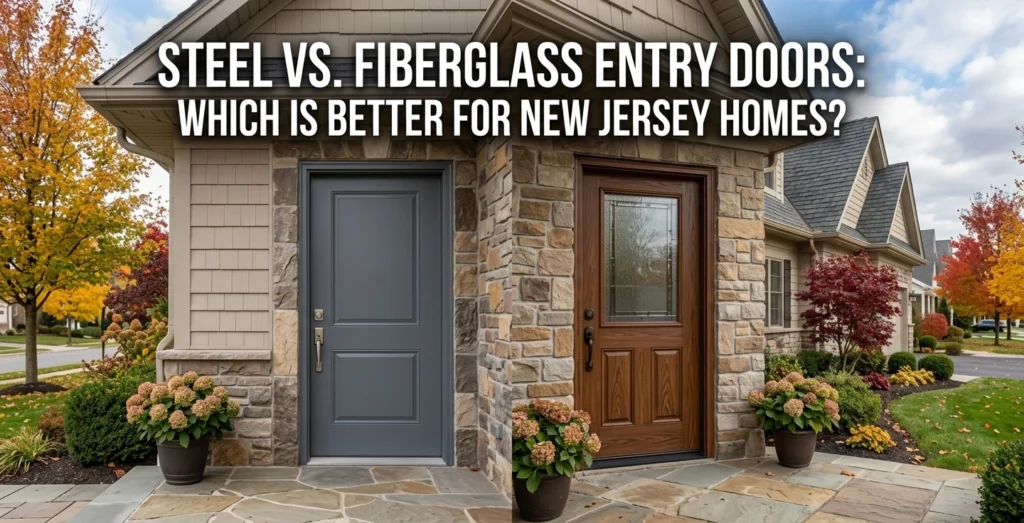


If you’re shopping for a new entry door in New Jersey, you’ll run into the same question almost immediately: fiberglass or steel?
Both are excellent options. Both outperform wood in nearly every practical category. But they solve slightly different problems, and the right answer depends on your home, your priorities, and your budget.
This guide breaks down the honest differences — cost, durability, energy efficiency, maintenance, and what New Jersey’s climate actually demands.
The Quick Comparison
| What You’re Comparing | Steel | Fiberglass |
| Upfront Cost (installed) | $1,800 – $3,200 | $2,300 – $4,700 |
| Lifespan | 20–40 years | 30–50+ years |
| Energy Efficiency | Good (R-2 to R-5) | Excellent (R-5 to R-7) |
| Maintenance | Repaint every 5–10 years | Minimal; no repainting needed |
| Durability | Dents, rusts if paint fails | Won’t dent, rust, or warp |
| Appearance | Painted only | Can be stained to look like wood |
| Security | Excellent (rigid, multi-point locks) | Very good (solid core) |
Steel Entry Doors: The Case for Steel
Steel doors are the most popular entry door category in the country, and for good reason.
What Steel Does Well
Security. Steel’s rigidity and compatibility with multi-point locking hardware makes it the natural choice if security is your primary concern.
Affordability. A ProVia steel entry door typically runs $1,800–$3,200 installed, which is $500–$1,500 less than a comparable fiberglass unit.
Impact resistance. Steel doors are harder to dent than most homeowners expect from a mid-range option.
Fire resistance. Steel offers better protection in case of fire.
The Downsides of Steel
Repainting required. Steel doors are painted, not stained. In New Jersey’s climate, they require repainting every 5–10 years, particularly on south and west-facing exposures that take direct sun.
Dents and scratches. Steel is more prone to cosmetic damage than fiberglass.
Rust risk. Steel can rust if the surface paint is compromised.
Less energy efficient. Steel typically has lower insulation values (R-2 to R-5) compared to fiberglass (R-5 to R-7).
Fiberglass Entry Doors: The Case for Fiberglass
Fiberglass doors are the premium choice for homeowners who want durability, efficiency, and style.
What Fiberglass Does Well
Low maintenance. Fiberglass doors do not rust, ever. They won’t rot, warp, or swell with humidity changes. They don’t require repainting.
Energy efficiency. Fiberglass insulation values are consistently among the best in the industry. A fiberglass door typically offers R-5 to R-7 insulation vs. R-2 for steel.
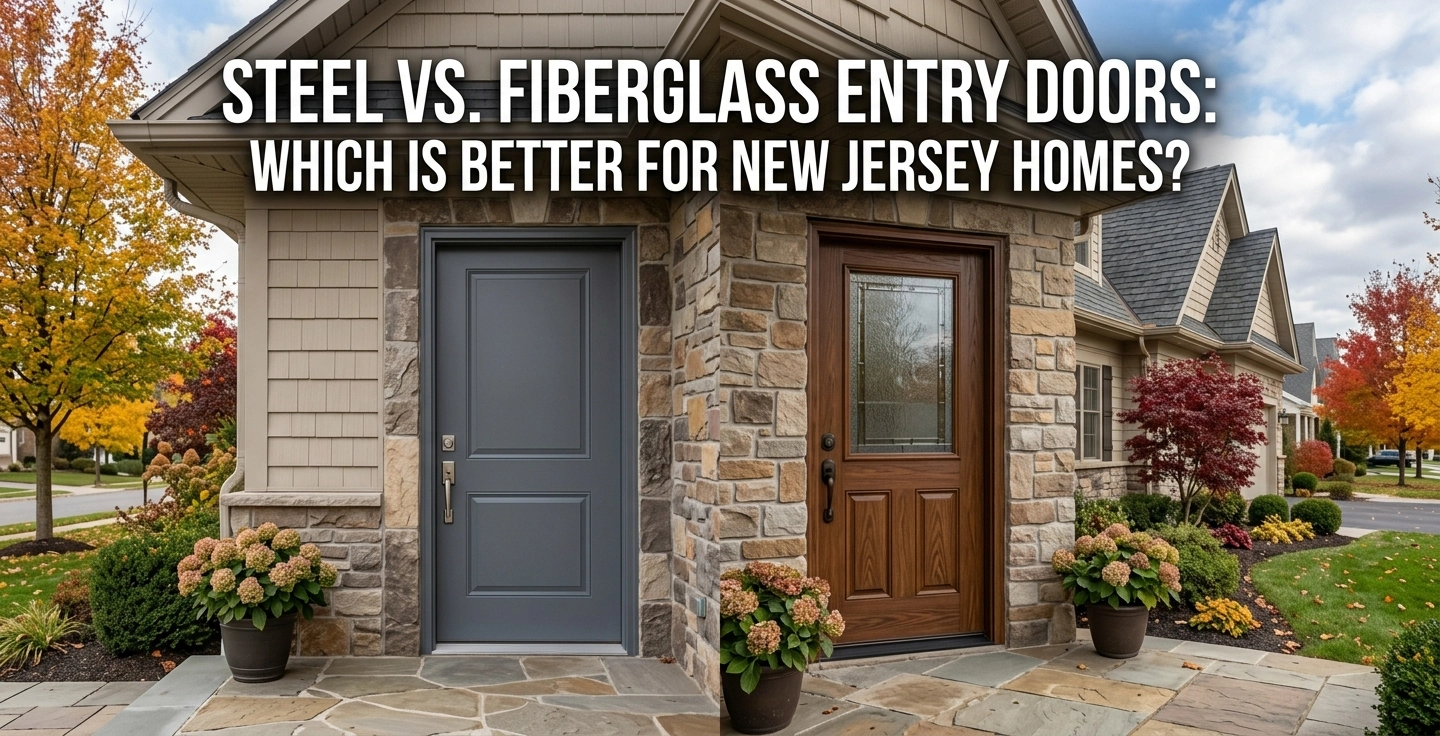
Aesthetics. Advanced wood-grain textures pressed directly into the fiberglass skin — when finished with a factory stain — are genuinely difficult to distinguish from real wood at conversational distance.
Durability. Fiberglass won’t dent from hail, won’t show surface rust at the bottom rail after a wet winter, and doesn’t require repainting.
Handles New Jersey’s climate. Fiberglass handles thermal cycling (daily expansion and contraction) better than steel over the long term, which is why we see fewer seal failures and sticking issues after 10+ years.
The Downsides of Fiberglass
Higher upfront cost. Fiberglass costs $500–$1,500 more than a comparable steel door. A ProVia fiberglass door typically runs $2,300–$4,700 installed.
Can crack on impact. Fiberglass can be susceptible to cracking if impacted hard.
What New Jersey’s Climate Actually Demands
New Jersey runs from below-zero wind chills in January to 95-degree heat index days in August, with significant humidity swings year-round. This matters for door selection in specific ways:
Thermal cycling. Doors expand and contract daily. Fiberglass handles this better than steel over the long term.
Sun exposure. Dark-painted steel doors on south and west-facing entries absorb heat and may fade or blister faster. Fiberglass holds up better.
Salt air. For coastal New Jersey counties (Monmouth, Ocean, Atlantic, Cape May), steel is at risk of corrosion. Fiberglass is the better choice.
Moisture. New Jersey’s humid summers and wet winters mean moisture is a constant concern. Fiberglass won’t rust, rot, or warp.
Which One Should You Choose?
Choose Steel if:
- Security is your primary concern
- Budget is a major factor
- Your door is not on a south or west-facing exposure
- You don’t mind repainting every 5–10 years
- You’re not in a coastal area
Choose Fiberglass if:
- You want the best long-term value
- Low maintenance is important to you
- You want a wood-like appearance without the maintenance
- Your door faces south or west (direct sun)
- You’re in a coastal area (salt air)
- Energy efficiency is a priority
The “Forever Home” Philosophy: If you plan to stay in your home for 10+ years, fiberglass is almost always the better investment. The higher upfront cost pays for itself in lower maintenance and better energy efficiency over time.
Get Estimate Now
Frequently Asked Questions: Steel vs. Fiberglass Entry Doors
1. How much does a steel entry door cost in New Jersey?
A quality steel entry door installed typically runs $1,800–$3,200. ProVia Legacy Steel runs $4,500–$8,500.
2. How much does a fiberglass entry door cost in New Jersey?
A fiberglass entry door installed typically runs $2,300–$4,700. ProVia Ascent Fiberglass runs $6,000–$10,500.
3. Which is more energy efficient, steel or fiberglass?
Fiberglass is more energy efficient (R-5 to R-7 vs. R-2 for steel). The foam core in fiberglass doors provides superior insulation.
4. Which lasts longer, steel or fiberglass?
Fiberglass lasts longer — 30–50+ years vs. 20–40 years for steel. Fiberglass won’t rust, rot, or warp.
5. Do steel doors rust in New Jersey?
Yes, steel doors can rust if the paint is compromised. In coastal areas (Monmouth, Ocean, Atlantic, Cape May counties), salt air accelerates corrosion.
6. Can fiberglass doors look like wood?
Yes. Premium fiberglass doors have wood-grain textures pressed into the fiberglass skin and can be stained to look like real wood.
7. Which is more secure, steel or fiberglass?
Steel is more rigid and compatible with multi-point locking hardware, making it the better choice for security.
8. How often do steel doors need repainting?
Every 5–10 years in New Jersey’s climate, especially on south and west-facing exposures.
9. Which is better for coastal New Jersey?
Fiberglass. Steel rusts in salt air. Fiberglass won’t rust, rot, or warp.
10. What’s the ROI on entry door replacement?
Entry door replacement typically recoups 70–80% of its cost at resale. A premium fiberglass door can be a significant selling point.