

The realtor stood on the porch of the Colonial on Leighton Avenue and pointed up. “Those front-facing windows are original to the 1920s renovation. Single-pane. Wood rot at the sill on the left. The buyers will see this before they even walk inside.” The homeowner had been in the house for 14 years. They had replaced the HVAC, updated the kitchen, and painted the exterior twice. But the windows were the same drafty, fogging, hard-to-open units that came with the house when they bought it.
That conversation is happening all over Red Bank right now. The borough has one of Monmouth County’s most active real estate markets, a genuinely walkable downtown, and a housing stock that ranges from pre-war Victorians to mid-century ranches to newer townhomes near the Navesink River. Window replacement in Red Bank is not just an energy decision anymore. It is a competitive listing decision and a long-term maintenance decision rolled into one.
This guide covers what window replacement actually costs in Red Bank in 2026, how the historic district affects your choices, what materials work best for Red Bank’s climate and housing eras, and how to find a contractor who won’t cut corners.
Why Red Bank Homeowners Are Replacing Windows in 2026
Red Bank’s housing stock is older and more varied than most Monmouth County towns. The historic districts near Broad Street and the downtown corridor have homes that predate World War II by decades. The neighborhoods off West Front Street and toward the Navesink River have a layer of mid-century ranches and colonials from the 1950s through 1970s. The newer sections near the borough line have townhomes and single-families built in the late 1990s and early 2000s.
Each generation of housing has its own window problems right now.
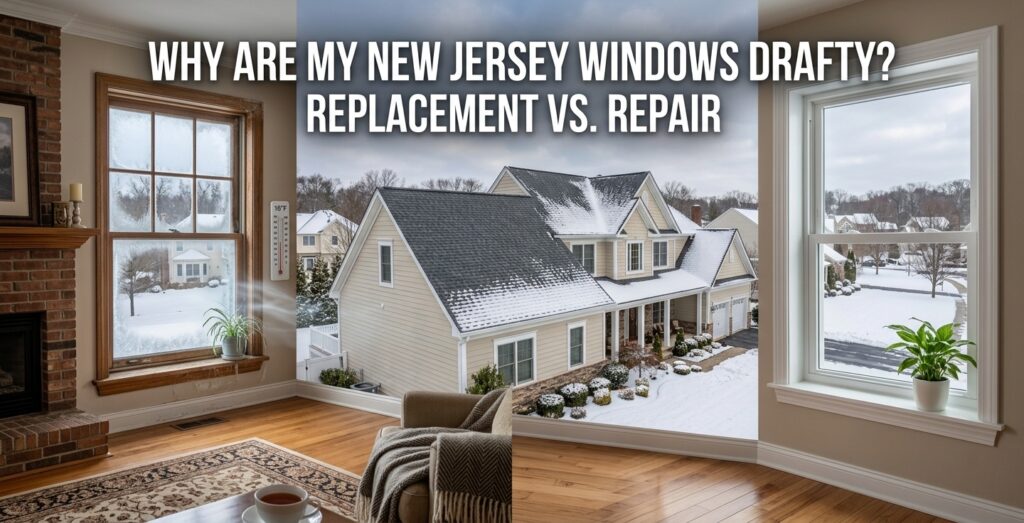
Pre-war Victorians and colonials are still running on original or early-replacement wood windows in many cases. Single-pane glass. Rope-and-pulley systems that have failed. Wood rot at the sills on the south and west exposures where weather hits hardest. These homes are charming, but their windows are energy disasters.
Mid-century ranches and colonials often have aluminum or early vinyl windows from the 1980s or 1990s. The seals have failed. Fogging between the panes is visible from the street. The frames are warped or corroded. These homes are solid, but their windows are telling buyers and utility bills the same story: they are tired.
Newer townhomes and 1990s builds have vinyl windows that are now 25 to 30 years old. The seals are failing. The hardware is breaking. The frames are showing UV damage on south-facing elevations. These are not old houses, but their windows have reached the end of their first lifecycle.
Spring 2026 has added urgency. Red Bank’s real estate market is active, and buyers are more educated about window condition than they were five years ago. A home with fogged windows, drafty frames, or visible rot generates repair credits or price reductions. Homeowners who replace windows before listing are seeing cleaner offers and fewer contingencies.
How Much Does Window Replacement Cost in Red Bank, NJ in 2026?
Red Bank runs at Monmouth County’s higher end for window replacement. The combination of older homes with non-standard opening sizes, historic district material requirements, and a labor market that reflects the borough’s cost of living all push prices up.
| Frame Material | Cost Per Window (Installed) | Best For |
| Vinyl (pocket) | $500 – $850 | Postwar homes, townhomes, budget-conscious projects |
| Vinyl (full frame) | $750 – $1,200 | Homes with damaged frames, older openings |
| Fiberglass | $1,000 – $1,800 | Historic homes, large openings, long-term ownership |
| Wood (clad exterior) | $1,200 – $2,200 | Historic district compliance, high-end restorations |
| Composite | $900 – $1,500 | Mid-century homes, balanced performance and cost |
Full home estimates (12–18 windows):
- Vinyl pocket replacement: $6,000 – $12,000
- Vinyl full frame replacement: $9,000 – $18,000
- Fiberglass full frame: $14,000 – $28,000
- Wood/clad: $16,000 – $35,000
Red Bank context: Homes in the historic districts near Broad Street often require fiberglass or wood, adding $5,000 to $10,000 to a full home project compared to vinyl in non-historic zones. Homes off West Front Street with larger-than-standard openings (common in mid-century ranches) add $200–$400 per window for custom sizing.
What Are the Signs Your Red Bank Home Needs Window Replacement?
Red Bank’s older housing stock produces warning signs that are specific to the materials and construction methods of each era.
Pre-war Victorians and Colonials (Historic Districts)
- Single-pane glass still in place anywhere in the home
- Rope-and-pulley systems that no longer hold the window open
- Wood rot at sills, especially on south and west exposures
- Visible gaps between the window frame and the rough opening
- Condensation forming on interior glass on cold mornings
- Drafts strong enough to move a curtain with the window closed and locked
Mid-Century Ranches and Colonials (1950s–1970s)
- Fogging between double-pane glass on any window
- Aluminum frames showing corrosion at the corners
- Windows that will not stay open or closed on their own
- Rising heating and cooling bills with no other changes
- Visible light around the perimeter of closed windows
Townhomes and 1990s–2000s Builds
- Seal failures visible as cloudy glass on south or west exposures
- Hardware (locks, handles, balances) that has broken or become difficult to operate
- Vinyl frames showing yellowing or warping from UV exposure
- Noise transmission that has increased noticeably over time
Full Frame vs. Pocket Replacement: Which One Does Red Bank Need?
This is the single most important technical decision in a Red Bank window project, and the answer varies by the age of the home.
Pocket replacement (insert windows) means installing a new window inside the existing frame. It is faster, cheaper, and less invasive. It works well when the existing frame is structurally sound, square, and free of rot or damage.
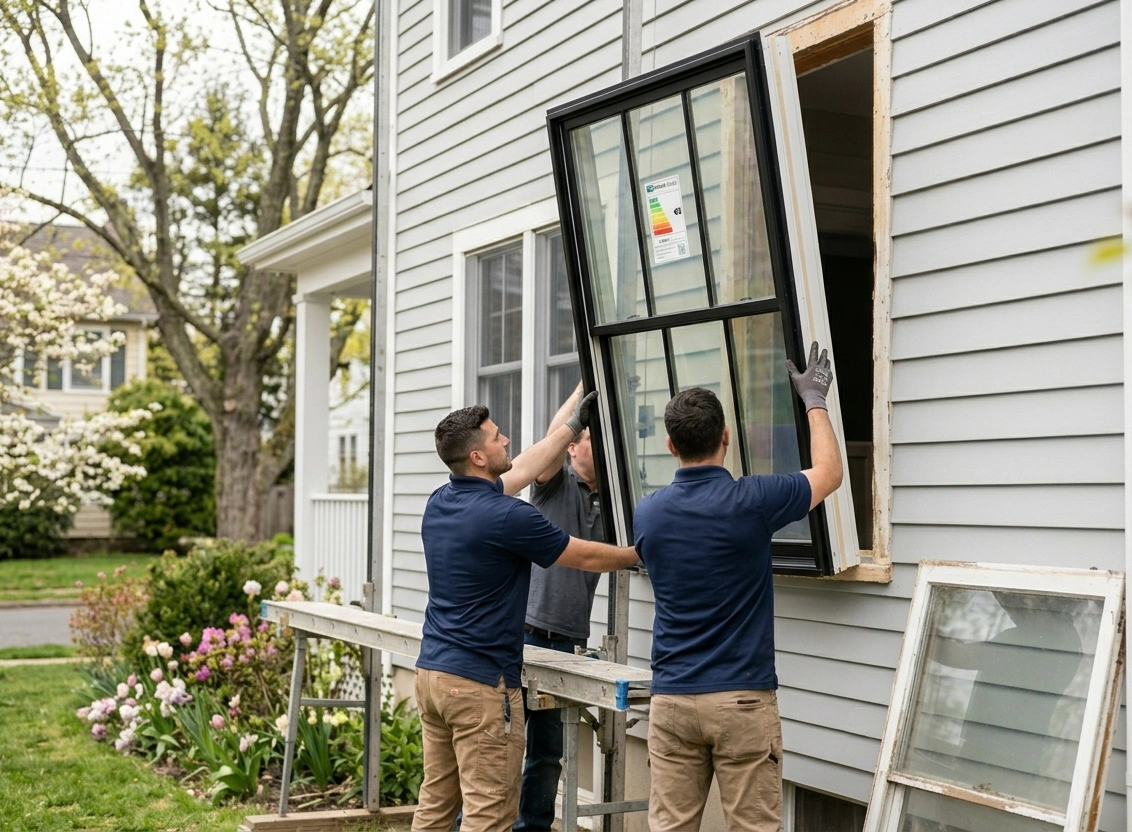
Full frame replacement means removing the entire window down to the rough opening, installing new framing if needed, and setting a completely new window. It costs more and takes longer, but it is the only correct choice when the existing frame has failed.
Red Bank decision guide:
| Home Type | Recommended Method | Why |
| Historic pre-war (wood windows, original) | Full frame | Original frames are almost always compromised after 80–100 years |
| Historic pre-war (replaced 1980s–1990s) | Inspect first; often pocket | Frames may still be sound |
| Mid-century ranch (aluminum original) | Full frame | Aluminum frames corrode and warp; rarely salvageable |
| Mid-century ranch (vinyl 1990s) | Pocket if frames sound | Vinyl frames hold up well if not damaged |
| Townhome / 1990s build | Frames are typically still square and sound |
Red Bank Historic District: What You Must Know Before Replacing Windows
Red Bank has designated historic districts, particularly near Broad Street and the downtown core. If your home falls within these zones, window replacement is not a simple like-for-like decision.
What changes in a historic district:
- You may need Historic Preservation Commission review before replacing street-facing windows
- Vinyl windows are often restricted or prohibited on primary elevations
- Fiberglass or wood clad windows are typically required for front-facing openings
- Window profiles (divided lites, muntin patterns, trim details) must match the historic character
- Color choices may be restricted
What does NOT change:
- Rear and side elevations are often less restricted, though full replacement still requires permits
- Window performance (energy efficiency, Low-E coatings, argon gas) is still permitted and encouraged
- Interior-facing windows have no historic restrictions
The practical impact: A Red Bank homeowner in a historic district should expect to pay $300–$600 more per window for historic-appropriate materials and may need to add 2–4 weeks to their timeline for commission review. A local contractor who works regularly in Red Bank will know which streets are affected and how to navigate the process.
Non-historic zone homes have no additional restrictions beyond standard building permits.
What Are the Best Window Materials for Red Bank, NJ Homes in 2026?
Red Bank’s climate is humid in summer, cold in winter, and the borough’s proximity to the Navesink River means higher humidity and occasional salt air. Material choices matter.
Vinyl Windows
Best for: Postwar homes, townhomes, non-historic zones, budget-conscious projects
Pros: Lowest cost, good energy efficiency, no maintenance
Cons: Can warp in dark colors, not allowed in historic districts, less rigid than fiberglass
Red Bank note: Standard double-hung vinyl is fine for 80% of Red Bank homes outside historic zones. Insulated vinyl frames add 15–20% to cost but improve energy performance meaningfully.
Fiberglass Windows
Best for: Historic homes (non-vinyl zones), large openings, long-term ownership
Pros: Very rigid, excellent thermal performance, paintable, looks closest to wood, allowed in historic districts
Cons: Higher cost, fewer manufacturers
Red Bank note: Fiberglass is the sweet spot for Red Bank’s pre-war homes. It satisfies historic district requirements (when painted), handles humidity without expansion, and lasts 40+ years. Worth the premium for homeowners planning to stay 10+ years.
Wood Windows (Clad Exterior)
Best for: Strict historic district compliance, high-end restorations
Pros: Authentic look, traditional operation, highest curb appeal in historic contexts
Cons: Most expensive, requires maintenance, less energy efficient than fiberglass
Red Bank note: Only necessary for homes under the strictest historic review. Most Red Bank historic districts accept painted fiberglass as a substitute.
Composite Windows
Best for: Mid-century homes, balanced performance and cost
Pros: Stronger than vinyl, less expensive than fiberglass, good thermal performance
Cons: Fewer manufacturers, less proven long-term
Red Bank note: A solid choice for 1950s–1970s homes, but fiberglass is usually a better long-term investment for a small cost difference.
Do You Need a Permit for Window Replacement in Red Bank, NJ?
Under New Jersey’s Uniform Construction Code, window replacement permit requirements depend on what you are doing.
No permit typically required:
- Like-for-like replacement in the same opening
- Same window type and size
- No structural changes to the rough opening
Permit typically required:
- Enlarging or reducing an opening
- Changing window type (casement to double-hung, etc.)
- Modifying the header or structural framing
- Any work in a historic district that changes exterior appearance
Historic district specific: Even if the construction permit is not required for a like-for-like replacement, historic district review may still be required for street-facing windows. Check with Red Bank’s zoning office before starting any street-facing window work in designated historic zones.
A qualified contractor will handle permit filing when required and will advise you on historic district requirements before any work begins.
What to Expect From Window Replacement Estimates in Red Bank
Red Bank attracts a wide range of contractors, from local specialists who know the historic districts to regional companies that treat Red Bank as just another stop on their route. Here is how to evaluate what you are being quoted.
What a Good Estimate Includes
- Per-window pricing broken down by opening size and type
- Frame material and brand specified, not just “vinyl windows”
- Glass package specified (Low-E, argon, U-factor, SHGC)
- Pocket vs. full frame clearly stated for each window
- Labor, disposal, and permit costs separated
- Warranty: manufacturer + installer, both in writing
What a Vague Estimate Includes (and why to avoid it)
- A single total price with no per-window breakdown
- “Premium vinyl windows” with no brand or series
- No mention of pocket vs. full frame
- No glass performance specifications
- Verbal warranty only
Red Bank Pricing Reality
- Lowest quote in Red Bank is rarely the best value, especially in historic zones
- A $500 vinyl pocket window from a regional chain is fine for a 1990s townhome but wrong for a historic Victorian
- A $1,200 fiberglass full-frame window in a historic district is expensive but correct
- Get three quotes minimum, with at least one from a contractor who specifically mentions Red Bank historic district experience
Real Project: Window Replacement in Red Bank, NJ
Case Study: Leighton Avenue Area, Red Bank Borough
Property: 2,100 sq. ft. Colonial, built 1925
Location: Leighton Avenue area, near Broad Street, Red Bank, Monmouth County
Pre-Project Condition: Original wood windows on the front facade (4 units) with visible rot at sills. Replacement vinyl windows from the 1990s on rear and sides (11 units), 6 of which showed fogging between panes. Homeowner reported drafts in winter and difficulty opening several windows.
Homeowner Goal: Stay in the home for another 10–15 years. Improve energy efficiency and curb appeal. Not in a historic district but wanted historically appropriate appearance on the front facade.
Findings:
- Front wood windows: full frame replacement required due to rot extending into surrounding trim
- Rear/side vinyl windows: frames were sound; pocket replacement acceptable for fogged units
- Three windows on the west elevation had warped frames requiring full replacement despite being newer
Solution:
- Front facade: 4 fiberglass double-hung windows, full frame, custom divided lites to match original appearance, painted colonial cream
- Rear/side fogged units: 6 vinyl pocket replacement windows, double-pane Low-E argon
- West elevation warped frames: 3 vinyl full frame replacement windows
- All 15 windows completed in 3 days
Project Sequence:
Day 1: Front facade full frame replacement (most labor-intensive)
Day 2: Rear/side pocket replacements and west elevation full frames
Day 3: Trim, caulking, cleanup, inspection
Total Project Cost: $18,700
- Front fiberglass (4): $5,800
- Rear/side vinyl pocket (6): $4,200
- West elevation vinyl full frame (3): $2,700
- Trim repair and finishing: $1,500
- Permit and disposal: $500
- Contingency for rot (actual): $4,000 (less than estimated $6,000)
Result: Homeowner reported noticeably reduced drafts the following winter. Heating bills dropped approximately 18% compared to the previous year. Curb appeal improved significantly from the front. The homeowner plans to stay and is now considering siding replacement in 2027.
How Do I Find a Trusted Window Contractor in Red Bank, NJ?
Red Bank has excellent contractors and mediocre ones. The difference in installation quality shows up within 3–5 years as seal failures, air leaks, and operational problems. Here is how to find the right one.
Verify Before Scheduling:
- NJDCA contractor license: verify at njconsumeraffairs.gov
- General liability and workers compensation insurance, both current
- Physical presence or established history in Monmouth County
- Reviews from Red Bank, Rumson, Fair Haven, or Little Silver from the past 12 months
Questions to Ask for a Red Bank Window Project:
- Do you handle pocket and full frame replacement? Which do you recommend for my home and why?
- Are you familiar with Red Bank’s historic district boundaries and review process?
- What brands do you install, and can you provide a written spec for glass performance (U-factor, SHGC)?
- Will you handle the permit filing if required?
- Do you subcontract installation or use your own crew?
- Can you provide three references from Red Bank or nearby Monmouth County towns from the past 18 months?
- What does your labor warranty cover, and for how long?
Red Flag Responses:
- “Everyone uses pocket replacement, full frame is a waste of money” (false; full frame is necessary for old or damaged frames)
- “You don’t need a permit for windows in Red Bank” (false; historic district changes require review)
- “All vinyl is the same” (false; quality varies enormously)
- “We can do your 15 windows in one day” (possible but usually means rushed, low-quality work)
Frequently Asked Questions: Window Replacement in Red Bank, NJ
Do I need a permit to replace windows in Red Bank, NJ?
Like-for-like replacement in the same opening typically does not require a construction permit. However, if your home is in a historic district, you may need Historic Preservation Commission review for street-facing windows even if no structural changes are made. Enlarging openings, changing window types, or modifying headers does require a permit regardless of location.
What is the best window material for Red Bank’s climate?
Fiberglass is the best long-term material for Red Bank’s humid summers and cold winters. It does not expand and contract like vinyl, handles salt air near the Navesink River well, and is allowed in historic districts when painted. Vinyl is fine for non-historic homes on a tighter budget. Wood is only necessary for strict historic compliance.
How long does window replacement take in Red Bank?
A typical home with 12–18 windows takes 2–4 days. Pocket replacement is faster (1–2 days). Full frame replacement takes longer (3–5 days) because each opening requires more work. Historic homes with custom-sized openings or significant rot repair can take 5–7 days.
Does window replacement increase home value in Red Bank?
Yes, particularly in Red Bank’s active real estate market. Fogged windows, drafty frames, and visible rot generate repair credits or price reductions from buyers. New windows improve energy efficiency, reduce noise from downtown or Broadway, and provide a clear selling point in listings. Homes with updated windows sell faster and with fewer contingencies.
Can I replace windows myself in Red Bank to save money?
You can, but it is not recommended for most homeowners. Historic district compliance is easy to violate unintentionally. Full frame replacement requires proper flashing and sealing to prevent water damage. Permit requirements are easy to miss. And manufacturer warranties often require professional installation. Hire a licensed contractor for anything beyond a basic like-for-like pocket replacement in a non-historic home.
What is the difference between U-factor and SHGC?
U-factor measures how well a window prevents heat from escaping (lower is better for cold climates). SHGC measures how well a window blocks heat from the sun (lower is better for hot climates). Red Bank needs both: a U-factor of 0.25 or lower for winter heating efficiency, and an SHGC of 0.25–0.30 for summer cooling. A good contractor will specify both in your quote.
Final Thoughts
Window replacement in Red Bank is not a one-size-fits-all project. The 1925 Colonial on Leighton Avenue needs a completely different approach than the 1995 townhome near the train station or the 1960s ranch off West Front Street. The historic district adds complexity for some homeowners but not all. The material choice matters more here than in many Monmouth County towns because Red Bank’s housing stock spans so many eras and because buyers are sophisticated enough to notice the difference between a cheap vinyl replacement and a historically appropriate fiberglass installation.
The homes near Broad Street, along Leighton Avenue, and throughout Red Bank’s residential neighborhoods have been through a lot of seasons. The ones that feel warm in winter, cool in summer, and look right from the sidewalk are the ones where the windows were replaced thoughtfully, with a contractor who understood the specific demands of Red Bank’s housing stock and handled the project correctly the first time.
Exterior Point works throughout Red Bank and Monmouth County. We handle window replacement across all housing eras, navigate historic district requirements when they apply, and give you a written breakdown by opening so you know exactly what each window costs. Free on-site assessments. Give us a call and we will walk your home with you and tell you what your windows need.