

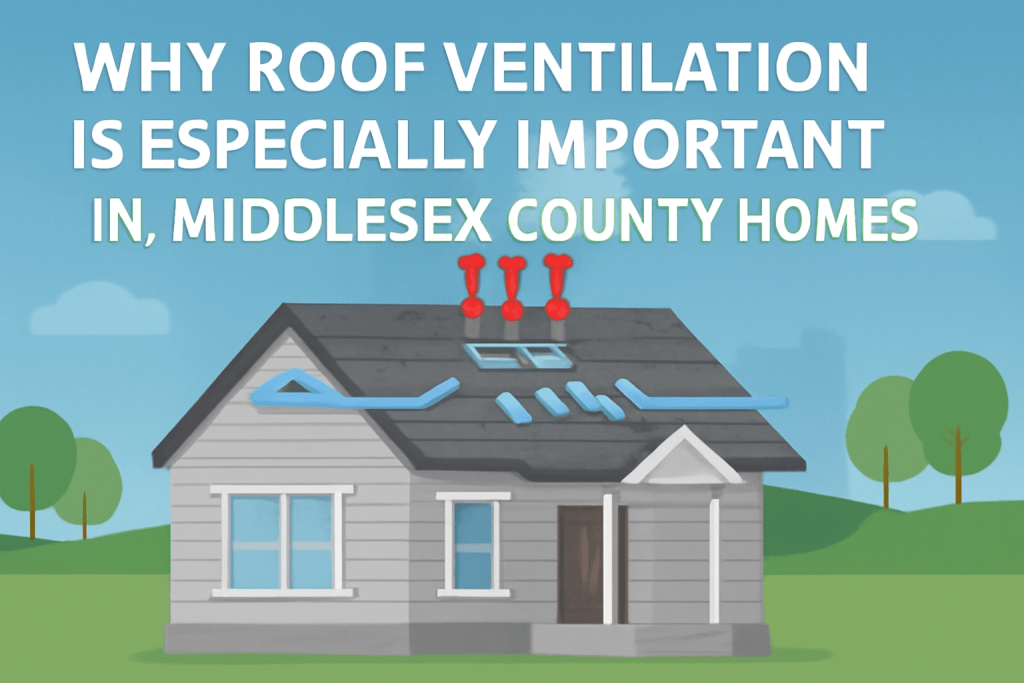
The Ventilation of Your Roof
The ventilation of your roof is a very critical aspect to keeping your home healthy and efficient but many homeowners tend to forget about it. In Middlesex County, NJ where the weather is unpredictable, proper roof ventilation has a even more added importance. If you’re hoping to lower energy bills, avoid damage to your roof, or simply maintain good indoor air quality, it will help to see the importance of roof ventilation.
In this article we are going to talk about the importance of protecting your Middlesex County homes with proper roof ventilation!
What is Roof Ventilation?
Attic Ventilation – refers to the system of intake and exhaust vents that allows air to move through the attic or roof. This air flow also allows to regulate the temperature and moisture level so that your attic stay cool during summer months and dry throughout the winter.
The right amount of roof ventilation will help avoid issues such as mold, mildew and ice dams, not to mention premature aging of your shingles.
Why You Should Get Roof Ventilation – Middlesex County, NJ
When you don’t have proper ventilation on your brand new house, it could easily be a fire booby-trap or an energy assassin.
Middlesex County, NJ Weather Considerations
Middlesex County, New Jersey sees a wide range of weather conditions which can make roof ventilation especially necessary. Find out why homeowners in our area should invest on roof ventilation for efficient attic airflow NJ:
● Humidity: NJ is very humid in the summer and moisture build taking place can occur. In the absence of proper ventilation, this can result in mold and wood rot and insulation damage.
● Cold Winters: In the winter, Middlesex County can experience extreme cold. Without good ventilation, heat leaking from the house will melt snow on a roof, sending water down until it hits frigid air that freezes it.
● Differential Seasonal Temperatures: Extreme changes in temperature from warm summers to freezing winters can further stress your roof. Good ventilation maintains the attic space temperatures, inhibits heat in the summer and minimizes ice damming in the winter.
The Benefits of Roof Ventilation
Prevents Mold and Mildew Growth
With out adequate ventilation moisture can get trapped in the attic, forming a nice environment for mold and mildew to grow. These problems can create health challenges for your family and threaten the structure of your home.
Extends Roof Life
Excessive attic heat can wear off your roofing material over time. The temperature should be moderated with the right amount of airflow so that your roof is not put under added pressure and will last longer.
Reduces Energy Costs
In the summer, your air conditioning will have to work harder if you have an unventilated attic. Maintaining good air flow can help you cool off your home and save energy, which should reduce your utility bills.
Prevents Ice Dams
During the winter, poor ventilation can cause heat to leak from your home and melt snow on your roof. When water runs down, it re-freezes at the eaves, creating ice dams that can cause damage to your roof and gutters.
How Roof Ventilation Works
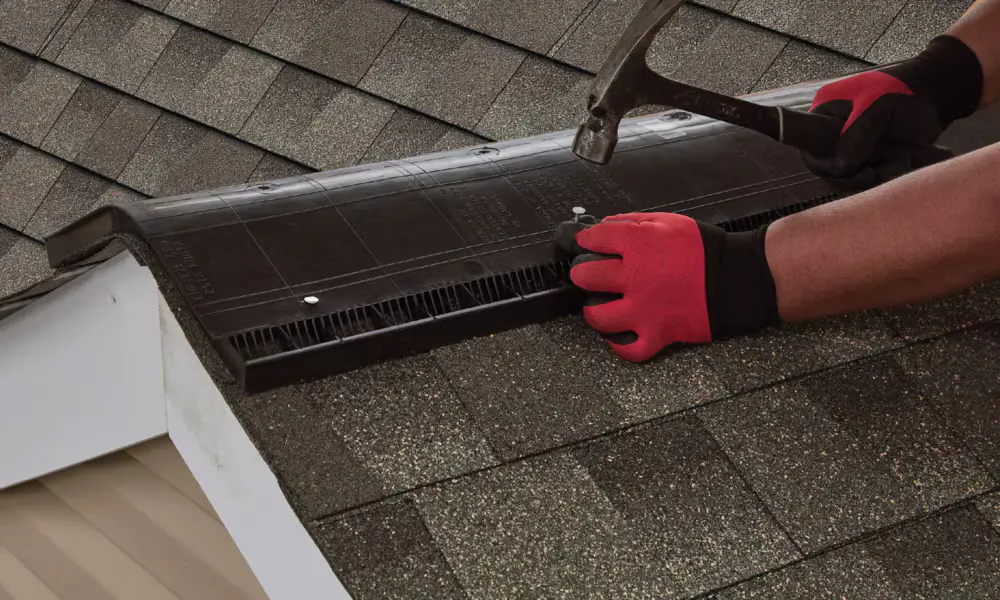
To know how such a mechanism works, one must consider the two kinds of vents usually found in homes:
- Intake Vents: These vents are situated at the soffit or eave of the roof to allow cool, dry air into your attic.
- Exhaust Vents: These are usually placed at the ridge line/top of a roof. They enable hot, moist air to escape from the attic space which leads to a balanced flow of fresh air throughout the roof.
Together, these intake and exhaust vents work with elements to optimize the airflow peaceably to help reduce heat in summer months and moisture in the winter.
Case Study: The Johnson Family’s Roof Ventilation Upgrade in Middlesex County
The Johnson family recently had their Roof Ventilation Upgraded in Middlesex County.
In 2024, the Johnson family from Edison NJ discovered that their attic was always hot, even with a high-efficiency AC system. When they found out their roof needed more ventilation, they made a new investment into the system.
Steps Taken:
- Inspection:The lack of attic airflow and resultant heat build up was then confirmed by a roofing specialist inspector.
- Upgrades:The contractor installed soffit vents at the eaves and ridge vents under the roofline.
- Results:Johnson reported a significant decrease in attic temperatures and greater comfort inside after installation of the vents. Their summer cooling bills were down 20% and they had no more ice dams in the winter.
This ‘real world’ example demonstrates the value of venting your roof, providing comfort, saving energy and prolonging the life of your home.
FAQs About Roof Ventilation in Middlesex County Homes
Q1: How can I tell if my attic has poor ventilation?
Signs of poor ventilation include high attic temperatures in the summer, moisture or condensation in the attic, mold or mildew growth, and ice dams on the roof during winter. If you notice any of these signs, it’s time to check your ventilation system.
Q2: How much does it cost to install roof ventilation?
The cost of installing roof ventilation varies depending on your home’s size, the type of vents you choose, and whether you need a contractor to inspect your attic. On average, homeowners can expect to spend between $500 and $1,500 for a roof ventilation system.
Q3: Can I install roof ventilation myself?
While it’s possible to install some types of roof vents yourself, it’s generally recommended to hire a professional. A roofing contractor will ensure that the vents are correctly positioned and that your attic is properly ventilated to prevent future problems.
Q4: How often should I inspect my roof ventilation system?
It’s a good idea to inspect your roof ventilation system annually, especially after major storms or extreme weather conditions. Checking for damage or blockages will help ensure that your attic continues to stay dry and cool.
Roof Ventilation Checklist for Middlesex County Homeowners
| Key Factor | Description | Importance |
| Soffit Vents | Located at the eaves, allow fresh air to enter the attic. | Ensures cool, dry air enters to balance heat buildup. |
| Ridge Vents | Installed at the peak of the roof to exhaust warm air. | Prevents hot air from getting trapped in the attic. |
| Continuous Ventilation | Combination of intake and exhaust vents. | Creates a consistent airflow to prevent moisture buildup. |
| Proper Installation | Vent systems must be correctly installed for efficiency. | Ensures maximum airflow and prevents long-term damage. |
| Insulation | Insulating your attic helps keep warm air in during the winter and cool air in during the summer. | Reduces the need for excessive heating and cooling. |
Conclusion
Roof Ventilation is very important, and below I will delve into why you should care if the roof has proper ventilation. We also benefit from the seasonal ebb and flow of the area we live in, as well as the humidity so it’s important to make sure your attic has airflow to halt mold growth, make your roof last longer, cut down on energy bills and keep away ice dam damage! By choosing the right ventilation you can protect your home and provide year-round comfort to your household. Haven’t had your roof inspected lately? It may be a good time to think about an upgraded roof ventilation system.