

Three estimates for siding replacement in Pine Avenue, Clark. Eight thousand dollars between the lowest and the highest. Same house, same footage, same week.
The homeowner laid all three out on the kitchen table and could not make sense of them. One contractor quoted vinyl with a basic house wrap. Another quoted fiber cement with a full moisture barrier and a detailed trim allowance. The third was somewhere in the middle but the description of what was included was vague enough that it was hard to tell what they were actually proposing. Nobody had explained the difference between the materials, the installation methods, or the warranty structures. The numbers just sat there, $8,000 apart, with no clear way to compare them.
That scenario plays out regularly across Clark, and it is not specific to any one contractor or any one homeowner. It happens because siding replacement in an affluent Union County suburb like Clark involves real decisions about materials, scope, and long-term value that most estimates never surface on their own. This guide covers what siding replacement actually costs in Clark in 2026, which materials make sense for the township’s split-level housing stock, what the permit process looks like, and how to read those estimates properly before you sign one.
Why Are So Many Clark, NJ Homes Replacing Their Siding Right Now?
Clark’s housing stock is concentrated in the 1970s and early 1980s, a period when the township’s split-levels and ranches were built quickly across the Brant Avenue corridor, the Central Avenue area, and the Pine Avenue residential sections. The vinyl and aluminum siding that went on those homes was built to last 20 to 25 years. Do the math from the mid-1970s and you will see why so many Clark siding jobs are happening right now.
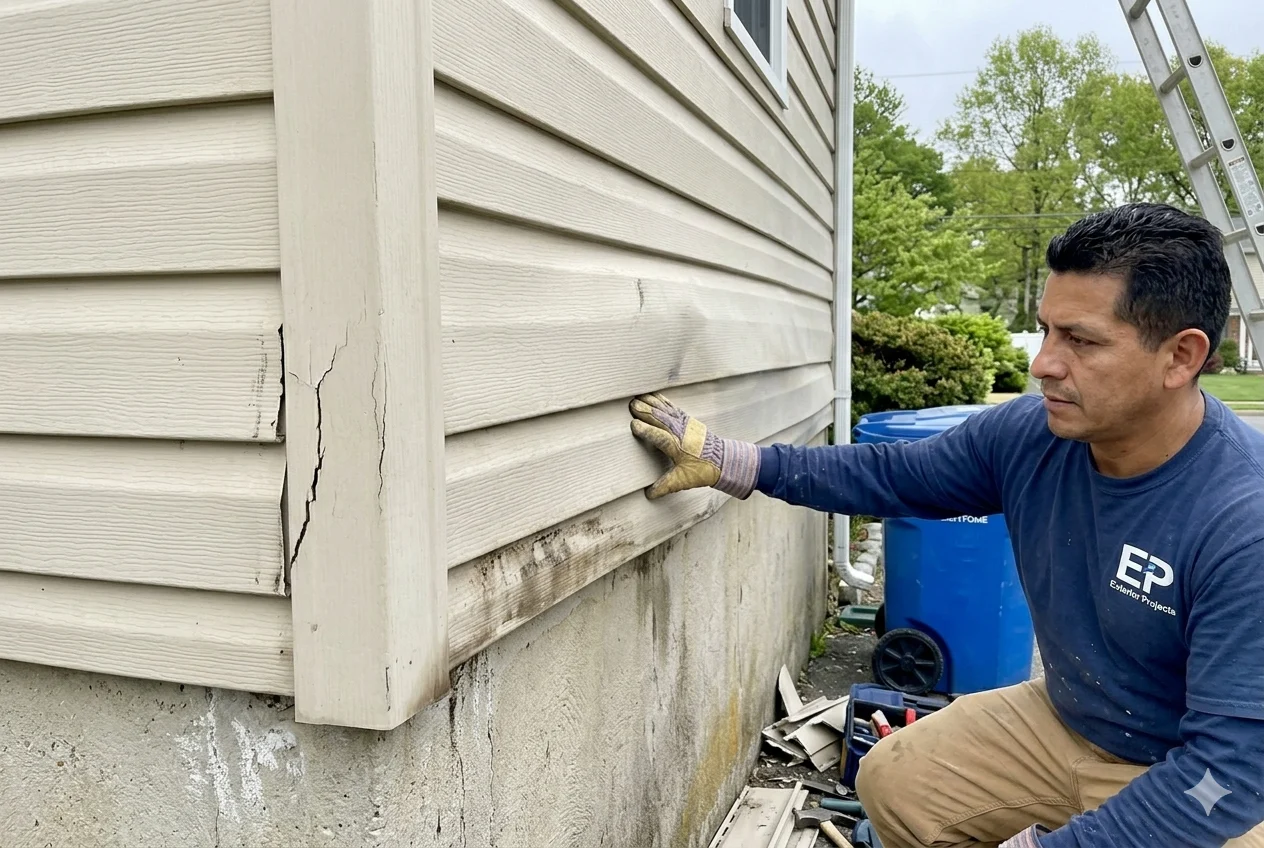
The split-level configuration adds a specific challenge. Where a ranch or colonial has a relatively uniform exterior, a split-level has multiple wall elevations at different heights, different sun exposures, and different moisture loading patterns. The lower level exterior, the section closest to grade, takes the most punishment from freeze-thaw cycling, snow and ice contact, and drainage splash. On a Clark split-level where the siding is now 40 to 50 years old, that lower section is almost always the first place that shows visible failure, but it is rarely the only problem.
Spring in Clark also brings a surge in pre-sale renovations. The township has a strong and active real estate market, and homeowners preparing to list know that updated exterior siding is one of the most visible improvements a buyer evaluates from the driveway. Union County buyers at Clark’s price points notice the difference between standard vinyl and a well-installed James Hardie job. That curb appeal investment is a real factor driving the volume of siding work in the township right now.
How Much Does Siding Replacement Cost in Clark, NJ in 2026?
Clark runs slightly higher on siding costs than Middlesex County towns for two reasons: Union County labor rates are a step above central NJ, and Clark homeowners generally select premium materials at a higher rate than the regional average. Here are realistic installed price ranges for Clark and Union County in 2026.
| Siding Material | Cost Per Sq. Ft. (Installed) | Full Home Estimate | Best For |
| Vinyl Siding | $7 to $13 | $9,000 to $17,000 | Budget-focused, shorter-term ownership |
| Insulated Vinyl Siding | $10 to $15 | $12,000 to $21,000 | Energy efficiency, mid-range Clark homes |
| Fiber Cement (James Hardie) | $11 to $19 | $14,000 to $26,000 | Premium finish, resale value, split-levels |
| Engineered Wood Siding | $9 to $16 | $11,000 to $22,000 | Natural wood look, mid to upper range |
| Cedar Wood Siding | $15 to $27 | $20,000 to $38,000 | Premium homes, architectural detail |
These are installed costs covering labor and standard trim work. Split-level homes in Clark typically run toward the higher end within each material range because of the multiple wall elevations, more trim detail, and the additional care required at the transition between upper and lower sections.
What Pushes the Price Up on Clark Split-Level Jobs
- Multiple wall elevations requiring staging and setup at different heights
- Tear-off of original vinyl or aluminum siding plus any additional layers added over the years
- Moisture barrier upgrades, particularly on lower-level walls where freeze-thaw cycling is most intense
- Rotted or water-damaged sheathing in lower-level sections discovered once the old siding is removed
- Premium material selection: fiber cement and engineered wood both carry higher per-square-foot costs than vinyl
- Union County labor rates, which run 10 to 15 percent above central NJ averages
What is the Best Siding Material for a Clark, NJ Home?
Clark is not an average market and the material conversation here reflects that. The township has home values that place it among the upper tier of Union County municipalities, and the homeowners who are investing in siding replacement are generally not looking for the cheapest option that gets the job done. Here is how the main choices compare for Clark’s specific housing stock and market context.
| Material | Lifespan | Maintenance | NJ Climate Rating | Clark Market Fit |
| Vinyl Siding | 20 to 30 yrs | Very Low | Good | Entry level, shorter ownership |
| Insulated Vinyl | 25 to 35 yrs | Very Low | Very Good | Mid-range, energy focus |
| Fiber Cement | 30 to 50 yrs | Low | Excellent | Most Clark split-levels, pre-sale |
| Engineered Wood | 25 to 30 yrs | Moderate | Good | Natural look, upper range |
| Cedar Wood | 25 to 40 yrs | High | Fair | Premium detail work only |
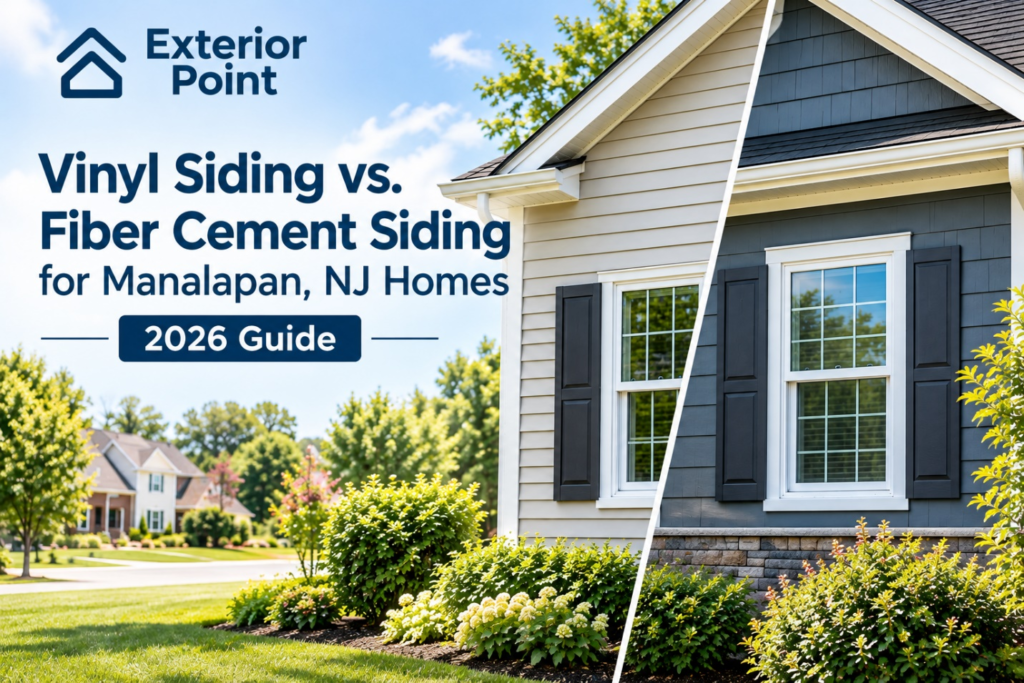
Vinyl vs. Fiber Cement Siding in Clark NJ: Which One is Actually Worth It?
This is where Clark’s market context changes the math compared to other Middlesex County towns. The case for fiber cement in Clark is stronger than it would be in a township with lower average home values, and here is why.
The Case for Vinyl in Clark
Vinyl makes sense for a Clark homeowner who is budget-constrained, planning to sell within the next five to seven years, and working with a home whose existing structure is in solid condition. It is not a bad product. It just does not deliver the resale signal or the lifespan that fiber cement does in this market.
The Case for Fiber Cement in Clark
Clark homes in the $550,000 to $800,000 range are competing against well-maintained comparable properties when they go to market. Buyers at that price point walk the exterior and know the difference between vinyl and James Hardie. A fiber cement job does three things for a Clark homeowner: it performs better against NJ’s freeze-thaw cycles and humidity, it lasts 30 to 50 years, and it reads as a premium material to a buyer who is evaluating the home’s condition. The $4,000 to $6,000 additional cost over vinyl is frequently the most efficient spend in a pre-sale renovation budget.
The Split-Level Lower Level Argument
Clark split-levels have a specific vulnerability that makes fiber cement even more compelling. The lower level exterior sits close to grade, faces snow and ice contact directly in winter, and takes the freeze-thaw moisture cycling harder than any other section of the house. Standard vinyl in that location can warp, crack, or trap moisture against the sheathing within 10 to 15 years. Fiber cement handles that exposure without warping and without the moisture retention problems that cheaper materials develop at grade level.
Do I Need a Contractor with a Permit for Siding Replacement in Clark, NJ?
| Quick Answer
Yes. Clark Township requires a construction permit for full siding replacement under New Jersey’s Uniform Construction Code. The permit must be filed by an NJDCA-licensed contractor. A legitimate siding company handles this as part of the project. Any contractor who says a full re-side does not need a permit in Clark is either unlicensed or cutting the process short. |
When a Permit Is Required:
- Full replacement of all existing siding on the home
- Installation of a new house wrap or moisture barrier as part of the project
- Any structural sheathing repairs discovered and completed during the job
- Adding insulated siding that modifies the thermal envelope of the home
When a Permit Is Generally Not Required:
- Replacing a small number of individual damaged panels as a repair
- Repainting or refinishing existing siding with no structural work
Clark Township processes permits through the standard NJ UCC system. The inspection that comes with the permit is your independent verification that the job was done correctly. On a Union County home at Clark’s price level, having that documentation in place also matters when you sell or make an insurance claim. Do not let a contractor talk you out of pulling the permit.
Why Are Siding Estimates in Clark, NJ So Different From Each Other?
Back to those three estimates on Pine Avenue. The $8,000 spread is not random and it is not because one contractor is trying to take advantage. Here is where it comes from in Clark specifically.
Material Specification Is the Biggest Variable
One contractor quotes standard vinyl. Another quotes insulated vinyl. A third quotes fiber cement. These are three materially different products with different costs, different installation requirements, and different long-term performance profiles. When the estimates land on your kitchen table as three total numbers with no breakdown, the only rational way to compare them is to call each contractor back and ask specifically what material and grade they are quoting. Most homeowners do not do this and end up selecting based on price alone.
Moisture Barrier Scope Differs
Standard house wrap and a premium moisture barrier rated for NJ’s freeze-thaw exposure are not the same product. On a Clark split-level where the lower level is taking direct moisture contact at grade, the quality of the moisture barrier matters for long-term performance. A quote that includes a basic wrap costs less and delivers less. Ask each contractor specifically what house wrap or moisture barrier they are specifying before you compare totals.
Lower Level Prep Is Sometimes Missing
Split-level lower sections often have issues behind the existing siding that contractors find when they pull the panels. Some contractors price this honestly and tell you upfront how additional repairs would be handled. Others leave it vague and present the number that wins the bid, knowing the conversation about sheathing repairs will happen mid-job when you have no good alternative. Ask directly: if you find rot or moisture damage in the lower level sheathing, how is that priced and who makes that call?
Warranty Terms Are Not Equivalent
A 1-year installation warranty and a 10-year installation warranty are not the same protection. Both may appear in estimates for the same Clark home. Ask for both warranties spelled out in writing: the manufacturer warranty on the material and the contractor’s labor warranty separately. In a Clark home transaction, having a transferable 10-year labor warranty is a real asset at resale.
What Are the Signs I Need New Siding on My Clark, NJ Home?
Clark’s split-level housing stock develops failure patterns that are specific to its configuration. Here is what to look for, organized by where on the house the problem typically shows up first.
| Warning Sign | What It Means | Where It Shows on Clark Split-Levels |
| Warped or buckled lower-level panels | Freeze-thaw moisture cycling behind panels | First visible at grade level, north and east faces |
| Fading or chalking on south face | UV degradation, protective coating depleted | Upper level south-facing wall takes most sun in Clark |
| Soft spots when pressing panels | Sheathing moisture damage behind panel | Lower-level exterior, especially near garage transitions |
| Paint peeling on interior walls | Moisture migrating from outside in | Basement or lower level interior walls near exterior |
| Rising energy bills | Thermal barrier failing, conditioned air escaping | Lower level heating costs spike when siding seal fails at grade |
| Siding age over 40 years | Material well past designed lifespan | Most Clark split-levels from the 1970s and early 1980s are now in this range |
Real Project: Siding Replacement on a Split-Level in Clark, NJ
| Case Study: Brant Avenue Corridor, Clark Township
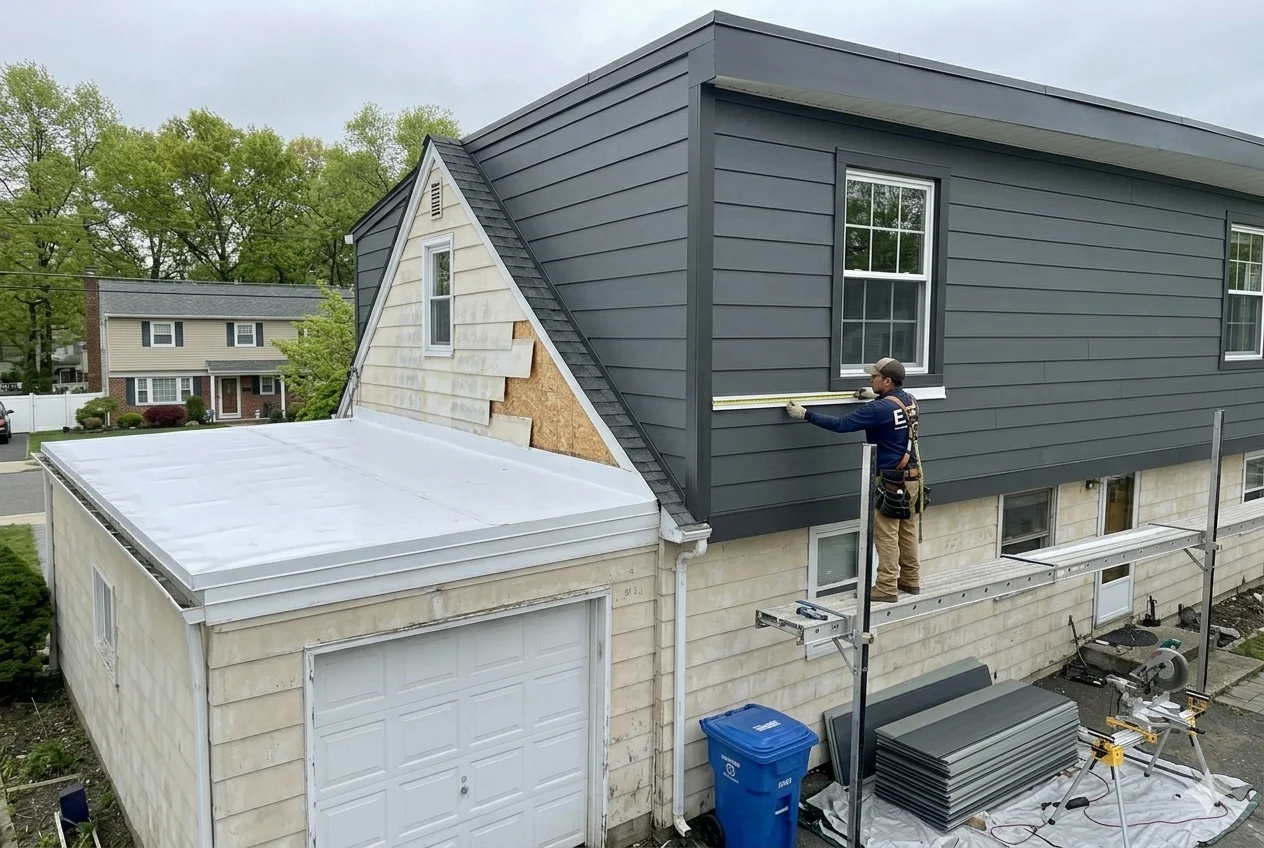
Property: 1,920 sq. ft. split-level, built 1974 Location: Brant Avenue corridor, Clark Township, Union County Original Siding: Vinyl siding, original to the home (52 years old at time of inspection) Problem: Homeowner was preparing to list the property and had received three estimates ranging from $13,200 to $21,400. The realtor had flagged the siding as a visual concern, particularly the lower level where two panels near the garage had buckled outward and the corner trim was pulling away from the foundation edge. Inspection Finding: Full tear-off revealed soft OSB sheathing behind the buckled lower-level panels, approximately 60 square feet of moisture damage concentrated at grade level on the north face. The upper level sheathing was structurally sound throughout. Original house wrap had failed at multiple seams. Solution: Full tear-off of all vinyl siding. Replacement of damaged lower-level OSB sheathing. New premium moisture barrier installed on all four elevations. James Hardie fiber cement installed throughout in a warm greige profile. New corner trim, window surrounds, and soffit trim to match. Permitted through Clark Township. Total Project Cost: $19,800 (includes $1,200 for sheathing repair) Project Duration: 5 days Result: Home listed three weeks after completion. The realtor reported that the updated exterior generated noticeably stronger first showing traffic than comparable properties with original siding. Home sold above asking price within two weeks of listing. The buyer’s inspection confirmed no moisture issues behind the new panels. |
How Do I Find a Good Siding Contractor in Clark, NJ?
Union County attracts siding contractors from a wide area, and the spring season in a desirable township like Clark brings a range of operators from well-established local companies to out-of-region crews running high-volume, low-quality work. Here is how to tell them apart before you hand over a deposit.
Verify Before You Schedule:
- NJDCA contractor license: look up the number at njconsumeraffairs.gov before the first conversation
- General liability and workers compensation, both active and covering NJ residential siding work
- A physical address or established presence in Union County, not just a website and a phone number
- Google, Nextdoor, or Houzz reviews from Clark, Westfield, Cranford, or nearby Union County towns in the past year
Questions Worth Asking Before You Commit:
- What specific material and product line are you quoting, and can you show me a sample of it?
- Are you quoting full tear-off or installation over the existing siding?
- What moisture barrier are you specifying, and is it rated for the lower-level freeze-thaw exposure on a split-level?
- If you find rotted sheathing in the lower level when the old siding comes off, how is that priced and how does the decision get made?
- What are the two separate warranties, manufacturer on the material and your labor warranty on the installation?
- Will you handle the permit with Clark Township’s building department?
- Can you give me contact information for two or three recent jobs in Clark or neighboring Union County towns?
Frequently Asked Questions: Siding Replacement in Clark, NJ
How much does siding replacement cost in Clark, NJ?
For a standard Clark split-level, full siding replacement runs between $9,000 and $26,000 installed depending on material. Vinyl lands at $7 to $13 per square foot. Fiber cement runs $11 to $19. Union County labor rates run slightly higher than central NJ, and Clark split-levels with multiple elevations and more trim detail cost more per square than a simple ranch footprint. Get an itemized breakdown before comparing totals across estimates.
Do I need a licensed contractor with a permit for siding replacement in Clark, NJ?
Yes. Clark Township requires a construction permit for full siding replacement under NJ’s Uniform Construction Code, filed by an NJDCA-licensed contractor. A reputable siding company handles this process for you. If a contractor tells you a permit is not needed for a full re-side, that is a red flag. Unpermitted work creates real problems at the time of sale and can affect insurance coverage.
What is the best siding material for Clark, NJ homes?
Fiber cement, particularly James Hardie products, is the strongest choice for Clark split-levels on both performance and resale grounds. It handles NJ’s freeze-thaw cycles without warping, performs better at lower-level grade exposure than vinyl, and reads as a premium product to Union County buyers. Insulated vinyl is a solid mid-range option for homeowners who are not prioritizing maximum resale return.
How long does siding replacement take in Clark, NJ?
Most Clark split-level jobs take 4 to 7 days from tear-off to cleanup. The multi-elevation layout, trim details, and any sheathing repairs discovered during the job all add time compared to a simpler single-level footprint. Weather in Union County can affect spring scheduling by a day or two.
What are the signs I need new siding on a Clark split-level?
Warped or buckled panels on the lower level, particularly on the north and grade-facing walls, are the most common first sign on Clark split-levels. Fading and chalking on south-facing upper walls, soft spots when pressing panels near the garage transition, and moisture staining inside on lower-level interior walls are the others. If the siding is from the 1970s or early 1980s, get someone to look at it before another freeze-thaw season does more damage to the sheathing.
Can I put new siding over my existing siding on a Clark split-level?
Technically possible but almost never the right call, especially at the lower level. Overlaying on a split-level traps any moisture that is already behind the lower panels, covers sheathing damage that needs to be addressed, and adds weight. Given what is typically found behind 1970s and early 1980s Clark siding when it comes off, a full tear-off is the only way to know what you are actually working with.
Final Thoughts
Siding replacement in Clark is a meaningful investment and a visible one. In a township where homes are well-maintained and buyers pay attention to exterior condition, the material you choose and the contractor you hire both show up in the finished result in ways that are hard to fake.
The split-levels along the Brant Avenue corridor and the Central Avenue area have been through 40 to 50 winters. The lower level siding in particular has taken real punishment at grade, and it is showing it. Getting that work done properly, with fiber cement or high-quality insulated vinyl, a real moisture barrier, and a contractor who pulls permits and warranties their labor, is the version of this project that holds its value.
Exterior Point works throughout Clark and Union County. We handle both fiber cement and vinyl installations, manage permits with Clark Township from day one, and give you a written itemized estimate that shows exactly what is included. Free on-site assessments with no pressure. Give us a call and we will come out and tell you what we see.