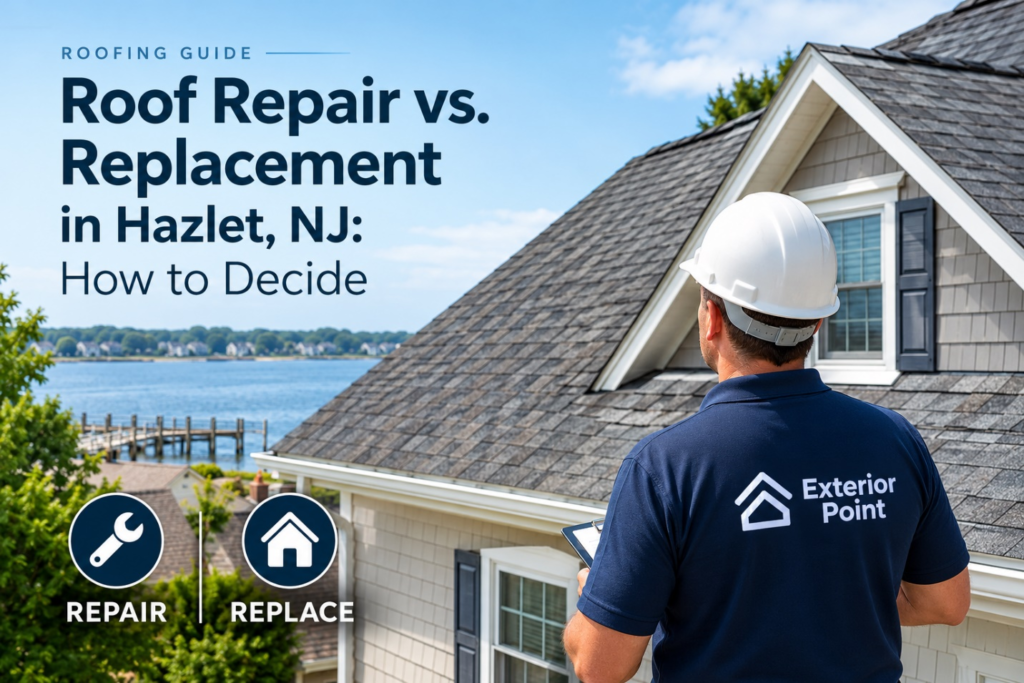


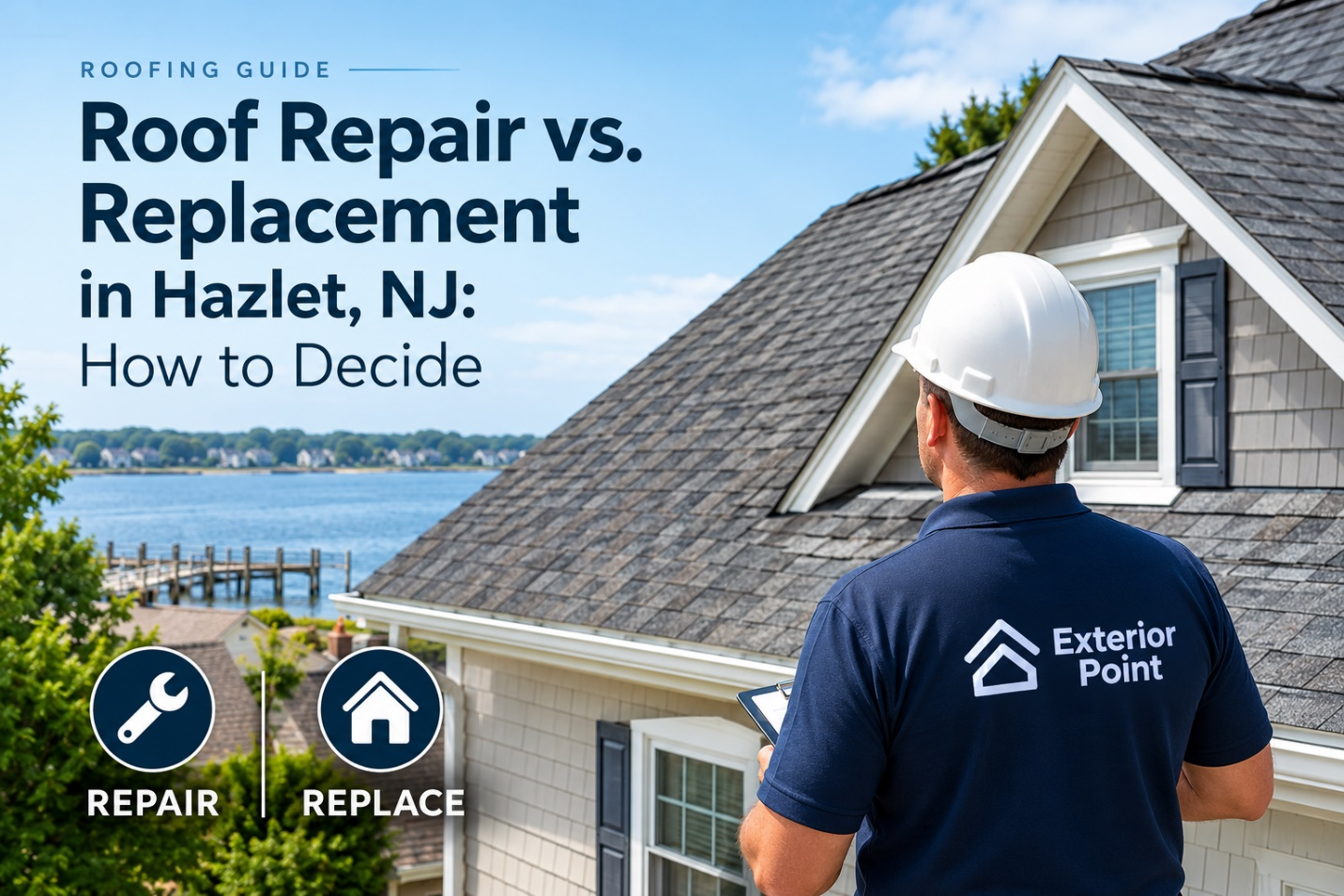
For homeowners in Hazlet, NJ, a roof must withstand seasonal weather changes, heavy rainfall, winter freezing and thawing, and potentially strong winds during coastal storms. Over time, these conditions can contribute to loose shingles, flashing problems, and leaks. When these issues appear, one important question arises: Is a roof repair enough, or is a complete replacement the better long-term option?
As long as your roof is still functional (i.e., it doesn’t leak), there are several options available to you, based on factors such as how old your roof is, what type of damage has occurred, the condition of the structure supporting your roof, and what you anticipate to spend on repairing problems with your roof over time. A minor leak does not necessarily indicate that you need a complete replacement of your roof. Likewise, a simple fix may not be the most appropriate answer to address issues related to an aging roof.
The simple general rule: When your roof has had only minor damage, and the remaining portion of your roof appears to be in great shape, then repairing your roof is usually the best choice. On the other hand, if you are experiencing repeated leakages, or your roof system is reaching the end of its useful lifespan, then replacing your entire roof should be considered.
Here is how to evaluate both options and make a more informed decision for your Hazlet home.
1. When Is Roof Repair the Better Option?
A reasonable option for repairing a damaged section of your roof would be to have it fixed if the damage is confined to one specific area of your roof, and all other areas of your roof are still in relatively good shape.
A skilled roofer can assess the cause of your issue, then decide if you can simply fix that area to give you back the same level of protection.
For example, a Hazlet homeowner may notice a small ceiling stain after a period of heavy rain. The cause could be damaged flashing around a chimney, a loose shingle, or another localized opening in the roofing system.
If an inspection confirms that the damage is limited and the surrounding roof remains in good condition, a targeted repair may be sufficient. The source of the leak should be identified before deciding on the scope of work.
Signs Your Roof May Only Need Repairing
Consider getting a roof inspection when:
- The loss or damage to a few shingles (due to high winds or debris from trees falling on the roof) does not always affect the entire roof structure.
- A localized leak: Water coming in from an area such as a vent, chimney, skylight, or flashing joint could be due to a repairable issue.
- Limited damage from flashing: Water may enter through the area where a roof penetration occurs if there are issues with the installation, such as loose, damaged, or improperly sealed flashing.
- If there is minor storm damage on your roof that is localized to one area of the roof and all other parts of the roof have undamaged or functional roofing material, then a repair to the damaged area may be sufficient.
- A newer roof: A roof that has significant usable life remaining will probably not require a complete replacement due to a single problem area.
These signs do not guarantee that a repair will be enough. Water can travel beneath roofing materials before appearing on an interior ceiling, so the visible stain may not reveal the original source of the leak.
A professional inspection can help determine how far the damage extends and whether the underlying roof deck is still sound.
The significance of repairing your roof at an early stage.
The sooner you take care of any roof issues, the less likely it is that you will have water damaging your home’s insulation, drywall/ceilings and/or wooden structural parts. In addition to taking care of a relatively small issue before it turns into a major problem, there are other reasons to get it repaired as soon as possible.
It is recommended that you schedule a home inspection when you see any signs of damage such as leaks, missing shingles, or damage to your home’s flashing, as opposed to waiting until the first big rainstorm.
2. When do you need to replace your roof?
The need for roof replacement will become increasingly important as the extent of damage to the roof grows and as the effectiveness of previous repair attempts decreases.
Even though a single shingle or flashing component may occasionally be able to be fixed, a roofing system that has suffered major wear and tear will likely continue to experience additional damage in other parts of the system.
For homeowners in Hazlet, roof damage following a strong coastal storm is not automatically a reason to replace the entire roof. If wind damage is confined to a small section and the remaining shingles and roof deck are in good condition, repairs may be appropriate.
However, if an inspection reveals widespread shingle deterioration, moisture-damaged decking, or multiple recurring leaks, replacement may be the more practical option.
Warning signs to look for when you need to replace your roof.
Your roof has come to the final years of its usefulness.
The longevity of a roof is determined by several factors, including the type of roofing materials used, how well the roof was installed, if the roof has adequate ventilation, if the roof is maintained properly and what kinds of weather conditions the roof will be exposed to. Most asphalt shingle roofs will have an estimated life span of approximately 20-30 years; however, there are many instances where a roof may need to be replaced early due to any one or more of these variables. While the age of the roof is an indicator of when it should be evaluated for potential replacement, it is not a direct reflection of whether or not the roof needs to be replaced.
The leaks continue to occur.
If you continue to get water in your home following repair work, the initial issue may not have been completely fixed, or there could now be additional damage occurring within other parts of the home.
Shingles are badly damaged.
Multiple areas on a single roof with curled, cracked, or missing shingles; and/or widespread granule loss can indicate the entire roof is failing rather than just one section.
The roof deck has evidence of being damaged by moisture.
When you have a soft, rotting or weakened roof deck it should be evaluated by a professional as soon as possible. If there is significant damage to the structure beneath the roof deck, replacing the entire roof may be more suitable than making numerous repairs to the existing deck.
The roof looks slanted or lowered.
Sagging visible in your roof could mean there is a serious issue with the structure of your home. It would be best to have this area evaluated as soon as possible by a professional who can assess the condition of your roof and determine if simply replacing some of the shingles will fix the problem.
The necessity for repairs has grown.
The cost of repeating service calls, recurring leaks, and increasing repair costs may be sufficient to consider a replacement as an alternative to the continued maintenance of the current roof.
When considering your roof, it’s important to view the entire structure as one cohesive unit. It may be better to replace the entire roof than just one component if many of them are failing simultaneously.
3. Roof Repair vs. Replacement: A Quick Comparison
The following comparison can help you understand which option may be worth investigating for your property.
| Factor | Roof Repair | Roof Replacement |
| Extent of damage | Limited to a specific area | Widespread or recurring damage |
| Roof age | Often more suitable for a roof with useful life remaining | More relevant when the roof is nearing the end of its service life |
| Leak frequency | One isolated, identifiable problem | Repeated leaks or multiple problem areas |
| Initial expense | Usually lower | Usually higher |
| Work involved | Fixes a specific problem | Replaces the existing roofing system |
| Long-term considerations | Depends on the condition of the remaining roof | Provides an opportunity to address underlying issues and install new materials |
| Best next step | Confirm that the damage is localized | Obtain a detailed replacement assessment and estimate |
Neither option is automatically better for every home. The decision should reflect the actual condition of your roof, the proposed scope of work, and your budget.
What are the average costs for repairing a roof compared to replacing a roof in Hazlet, NJ?
The cost of repairing or replacing your damaged roof will likely be a primary factor in determining your best option. However, there are many variables that can affect the estimated cost of repairs or replacements including the type of property and the scope of work required.
What Influences Roof Repair Costs?
- The price of fixing a roof can vary based on:
- the level of injury/damage, as well as the area of injury/damage.
- Shingles/roofing components that are in need of repair.
- Whether the penetration is a flashing, vent, or other type of roof penetration.
- Damage is easily accessible to the damaged area.
- Determine if there is any water damage on the underlying roof deck.
- The materials needed to fix the roof
Small repairs that involve only several shingles are generally fairly simple; however, leaks that involve damaged decking, numerous layers of the roof, or hard-to-reach flashing can require significantly greater effort.
What Affects Roof Replacement Costs?
A full roof replacement is typically more expensive than other types of repairs. There are several important cost factors in determining the total price for a new roof. These factors include:
- Roof size and slope
- Product and Material Selection for Roofing
- Removal and Disposal of Old Materials
- The state of the roof deck
- The system components include the flashing, underlayment, ventilation and other related products.
- Labor, availability of resources and the complexity of the project.
The best way to make a decision about whether to repair or replace your roof, is to look at how much it costs to do the suggested repair, the condition of the rest of your roof, and what may need to be done in the future.
For instance, repairing a single localized leak in an otherwise functional roof might make sense financially. On the other hand, if you have multiple areas of deterioration within your roof and you keep finding new leaks in various locations, then repeating those repairs will likely not provide the same long-term benefit as replacing the entire roof.
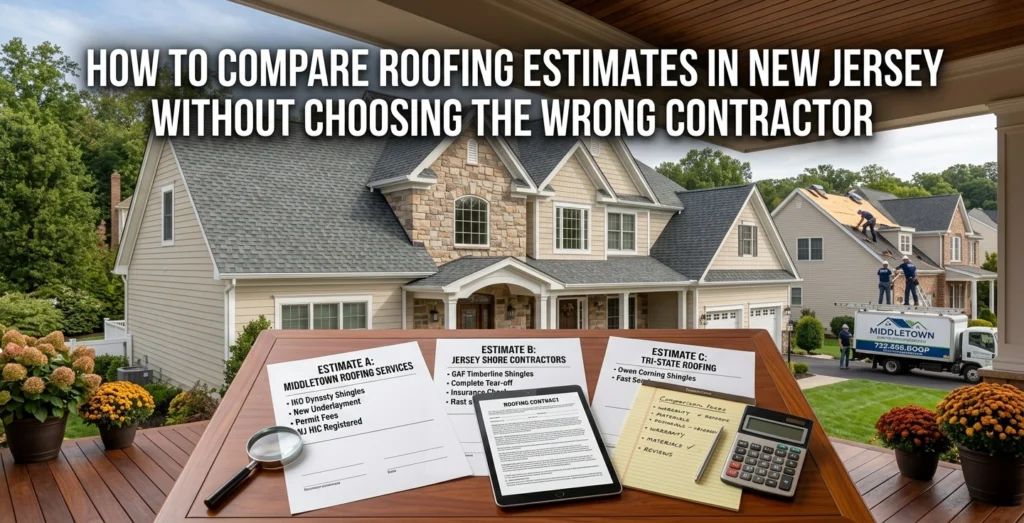
Ask the roofing contractor to explain the problems, what needs to be repaired or replaced, and give you a written estimate. If they suggest replacing your roof rather than repairing it, ask them why they think repair would not work.
5. How Hazlet’s Weather Can Have an Effect on Your Roof
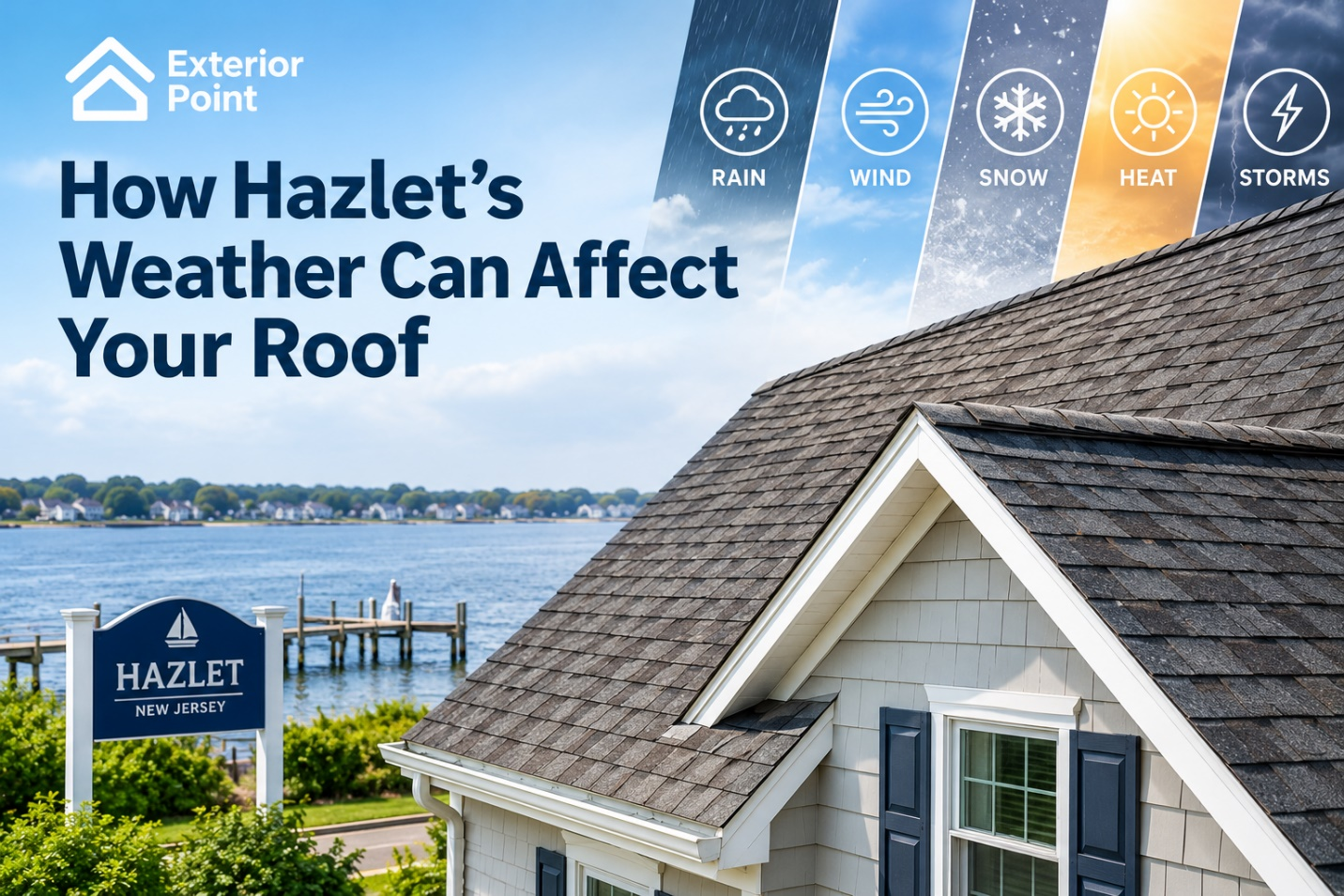
Hazlet, located in Monmouth County near Raritan Bay, experiences a mix of coastal weather influences and seasonal temperature changes. Homes in the area may be exposed to strong winds during coastal storms, heavy rainfall, humid summer conditions, and winter freeze-thaw cycles. These conditions can put stress on roofing materials over time, particularly around shingles, flashing, roof edges, and drainage systems.
Wind and Coastal Storms
Hazlet being situated right next to Raritan Bay means homes are susceptible to high winds during coastal storms and nor’easters. The extent of the damage will vary depending on the strength of the storm and the exposure of the property. The winds can result in shingles being blown loose, roof edges being damaged and vulnerable areas being exposed to water. Following a major storm it is worth looking for any visible signs of damage from the ground and arranging a professional inspection if you have any concerns.
Rain and Water Intrusion
Heavy rain will expose any weaknesses around the flashing, the roof penetrations and the worn shingles. In Hazlet you’ll also want to look at the gutters and downspouts to make sure the rainwater is draining away from the roof and the foundation. Clogged gutters or downspouts that aren’t directing the water properly can be a contributing factor to moisture issues, particularly where there’s already some roof damage.
Winter Freezing and Thawing
In the colder winters in Monmouth County water can get into the small gaps in the roofing and will freeze as the temperature drops. The freeze/thaw cycle can actually exacerbate any existing cracks or weaknesses in the joints and around the flashing. If you have any indication of leaks reoccurring after the winter weather then it’s definitely worth having it looked at before the damage gets any worse.
Summer Heat and Humidity
Hazlet’s hot, humid summers mean that proper attic ventilation and moisture control are important for roof performance. Poor ventilation can lead to excessive attic heat and moisture build-up which in turn can have an adverse effect on the roofing materials and the roof deck over time.
Local weather exposure in no way automatically equates to the need for a roof replacement. The real question is whether the roof in question is in good condition and can continue to protect the house. Following a major storm or where there is evidence of water ingress, a professional inspection will be able to tell you whether the answer is a targeted repair or a full replacement.
6. What Should a Roofing Inspection Include?
Before choosing between repair and replacement, ask for an assessment that examines more than the visible shingles.
A useful inspection should consider:
- Shingle condition:Check for missing, cracked, curled, loose, or deteriorating shingles.
- Flashing and roof penetrations:Examine vulnerable areas around chimneys, vents, and other openings.
- Signs of water intrusion:Look for evidence of leaks and moisture damage where safely accessible.
- Roof decking:Determine whether there are signs of soft, rotting, or weakened underlying materials.
- Ventilation and moisture management:Check for potential issues that may affect roof performance.
- Previous repairs:Review recurring problem areas and whether earlier work appears to have resolved the cause.
- Overall roof condition:Evaluate whether the remaining roofing materials are likely to provide useful service after a repair.
For homes in Hazlet, the assessment should also consider any storm damage, the condition of gutters and downspouts, and whether water is draining away from the home as intended. Properties with known drainage or flood concerns may require additional evaluation beyond a standard roof inspection.
Not every issue will be visible from the ground or during a basic visual assessment. Additional investigation may be needed if the inspection identifies signs of concealed damage.
Ask the contractor to show you the findings, explain the options, and distinguish necessary work from optional upgrades. Photographs of damaged areas can make the recommendations easier to understand.
7. Questions to Ask Before Approving Roofing Work
Whether you are considering a repair or a complete replacement, ask these questions before committing to the project.
Can you explain the cause of the problem?
A clear explanation helps you understand what failed and whether the proposed work addresses the underlying issue.
Can the existing roof reasonably be repaired?
Ask whether the damage is isolated and how much useful life the remaining roofing materials may have.
What happens if I choose repair instead of replacement?
A contractor should explain the limitations of a repair and identify any known issues that may remain.
Does the estimate include potential decking repairs?
Ask how concealed damage will be handled and whether additional work requires your approval.
What warranties apply to the proposed work?
Confirm the coverage, exclusions, and applicable terms for both materials and workmanship.
Can I review the scope and pricing in writing?
A written estimate should clearly explain the work, materials, expected project details, and any relevant conditions.
Getting clear answers helps you compare recommendations and make a decision based on the condition of your roof rather than pressure to choose the most expensive option.
8. Should You Repair or Replace Your Roof in Hazlet, NJ?
If your roof has one broken phase, a restrained leak, or a repairable flashing problem, a targeted repair may be the right place to begin.
If your roof is growing old, has considerable shingle deterioration, shows signs of structural or moisture damage, or continues leaking after preceding maintenance, a alternative assessment can be profitable.
The choice ought to account for the situation of the complete roofing device, now not simply the most visible symptom.
Exterior Point gives roof alternative offerings for New Jersey homeowners, with inspections, venture making plans, roofing cloth alternatives, and written warranty information. If you are unsure whether or not your current roof can keep serving your property, a professional evaluation can assist make clear the available options.
Request a Free Roofing Estimate from Exterior Point
You can also call (908) 793-9888 to discuss your roofing project and arrange the appropriate next step.
Frequently Asked Questions
Is it cheaper to repair or replace a roof?
A repair generally costs less upfront because it addresses a smaller area. Replacement costs more initially but may be more practical when damage is widespread or repairs are becoming frequent. Compare the scope of work and the condition of the remaining roof before deciding.
How do I know if my roof needs replacement instead of repair?
Look for widespread shingle deterioration, recurring leaks, extensive moisture damage, or a roof approaching the end of its expected service life. These signs warrant a professional assessment, but no single symptom automatically means replacement is necessary.
How old should a roof be before replacing it?
Many asphalt shingle roofs last approximately 20 to 30 years, although actual service life varies. Installation quality, ventilation, maintenance, material type, and weather exposure can all affect how long a roof performs.
Can a leaking roof be repaired without replacing the entire roof?
Yes, if the leak comes from a localized problem and the surrounding roofing materials and underlying structure remain in good condition. A professional should identify the source of the water intrusion before recommending a repair.
Can I replace only part of my roof?
Partial replacement may be possible when damage is limited to a specific section. However, matching existing materials, the condition of adjoining areas, roof design, and manufacturer requirements can affect whether it is practical.
Should I replace my roof after a storm?
Not necessarily. A storm may cause damage that can be repaired without replacing the entire roof. Arrange an inspection if you suspect damage, document visible problems from a safe location, and contact your insurer if you believe an insurance claim may be appropriate.
What should I do if my roof starts leaking?
Protect belongings, collect dripping water where safe, and contact a roofing professional promptly. Avoid climbing onto a wet or damaged roof. If the ceiling is bulging or there is a risk of collapse, keep people away from the affected area and seek appropriate emergency assistance.
Does Exterior Point offer roof replacement in New Jersey?
Yes. Exterior Point provides roof replacement services for New Jersey homeowners. You can review its roof replacement services or contact the company at (908) 793-9888 to discuss your project.
Final takeaway:
The best decision for your Hazlet home depends on the extent of the damage, the age and condition of the existing roof, and the long-term value of the proposed work. A careful inspection and a clear written estimate can help you determine whether a targeted repair or complete replacement makes the most sense.